Madrid
Madrid, Twice
Madrid bookended our trip — 36 hours before Andalucía, 24 after — and we were deliberate about not making it the focus. It’s a different register from the south: wide boulevards, chaotic traffic circles, a pace that doesn’t wait for you. Everything we saw made the case for a longer return. This was a preview, not the visit.
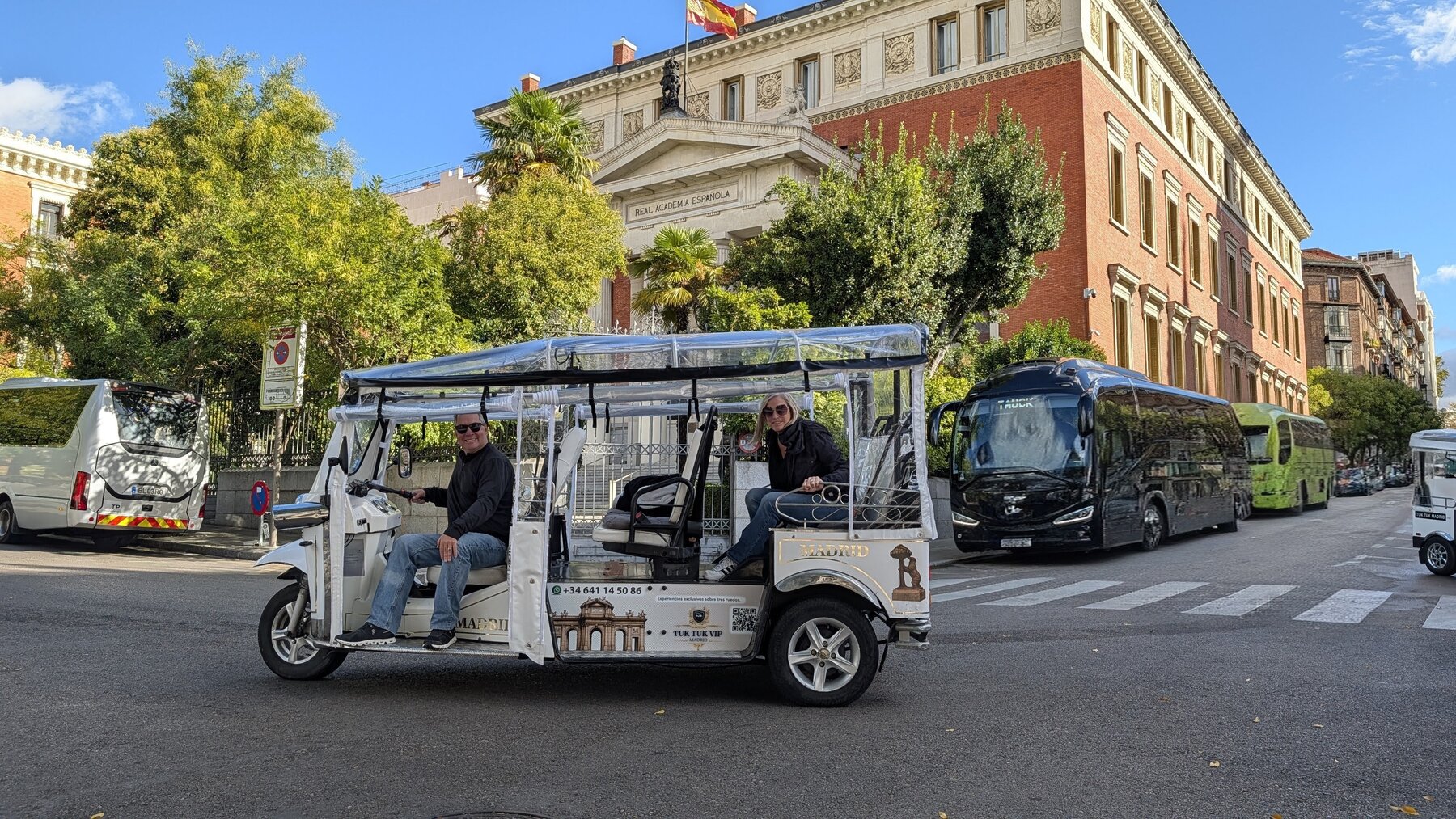
The Tuk-Tuk Introduction
A 3-hour tuk-tuk tour on our first visit covered more ground than walking could have. The open sides put you in the noise and heat of the city. With only 36 hours, breadth was the right trade: we saw the exteriors of things we’d want to return to, and stopped long enough at the Mercado to get a real taste of the city.
The Mercado de San Miguel, just off Plaza Mayor, is entirely tourist-oriented and doesn’t pretend otherwise. The 1916 wrought-iron and glass building is worth seeing on its own terms.
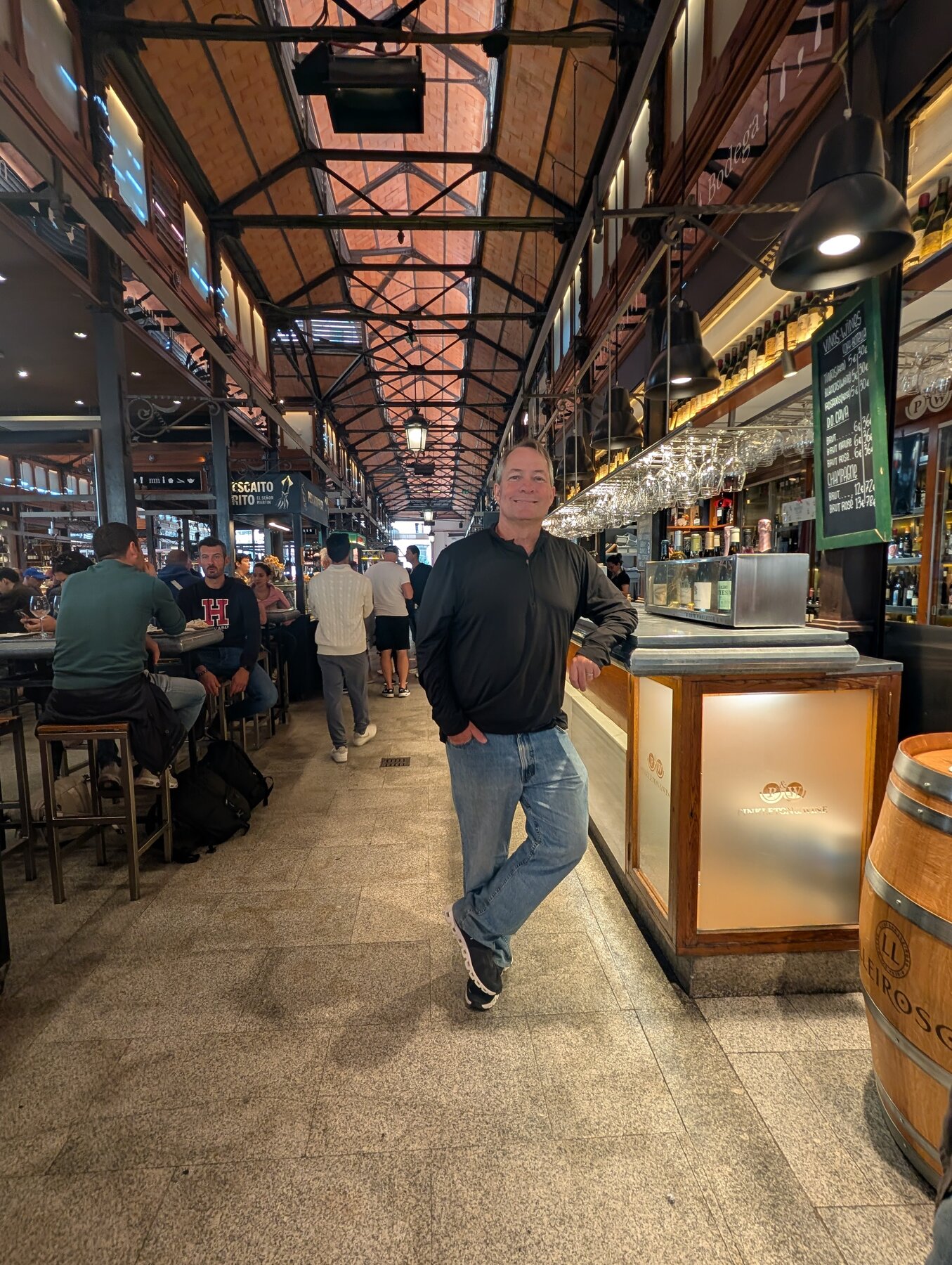
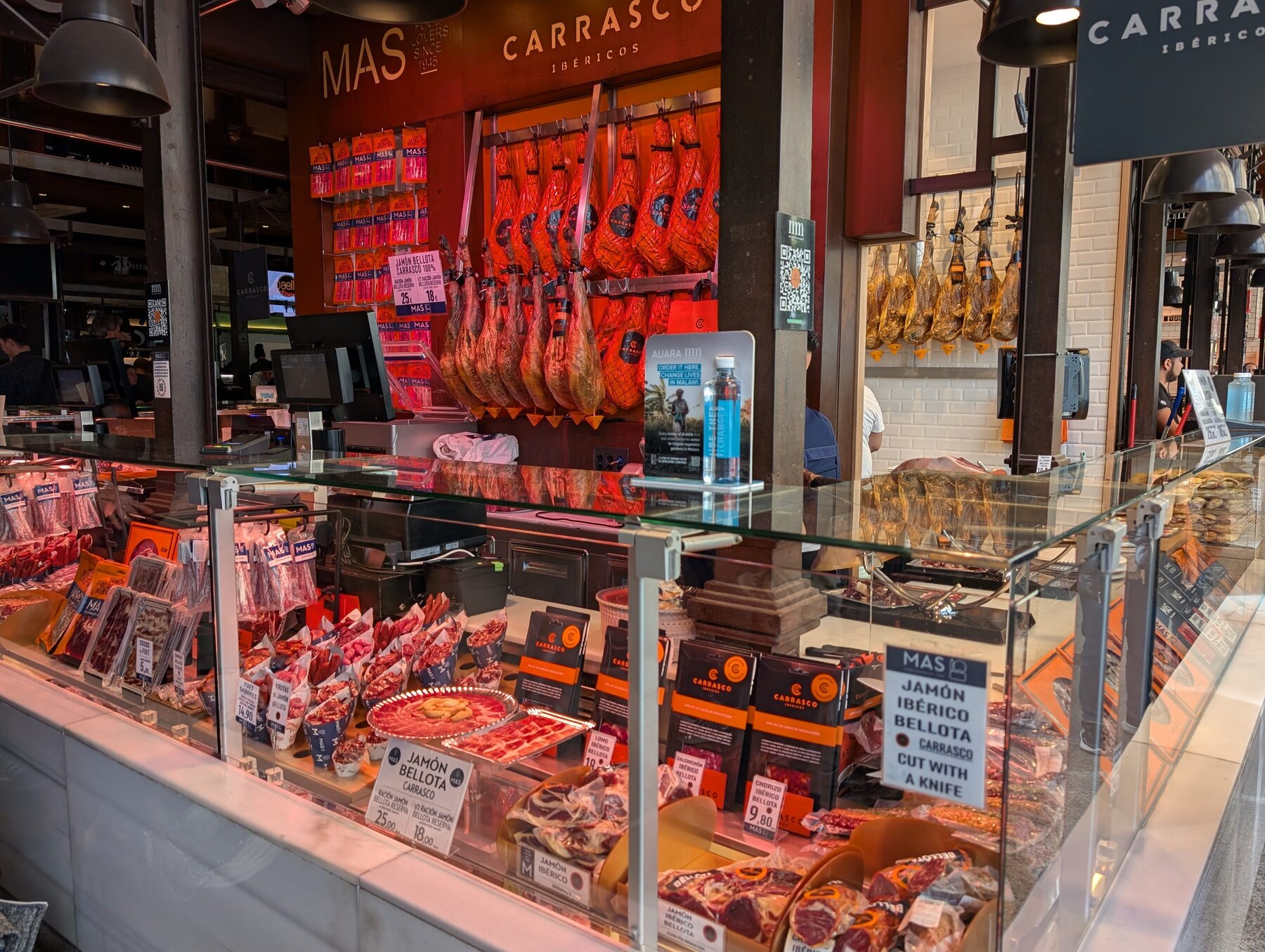
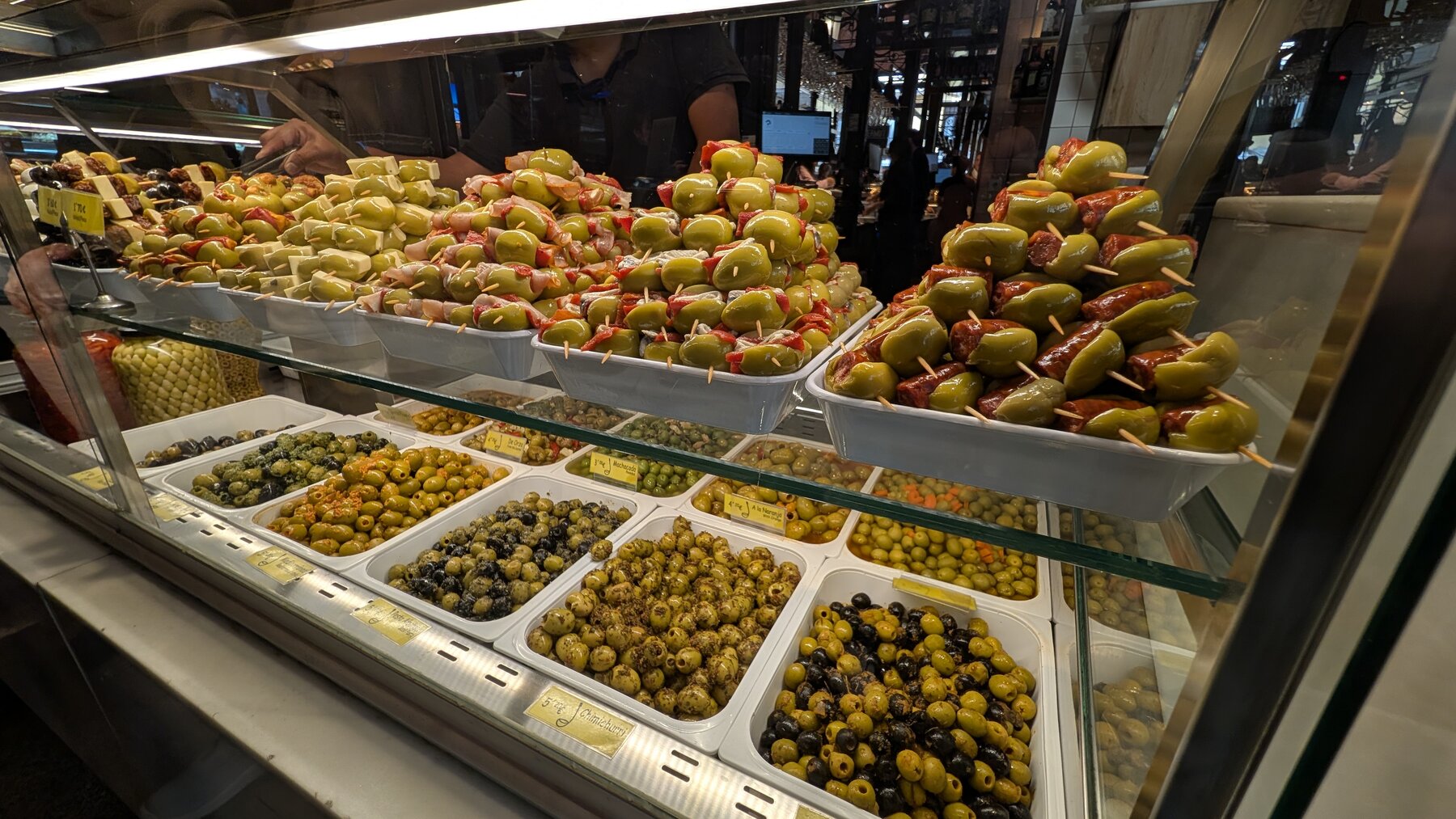
Inside, it’s a food hall built for grazing — small plates, wine by the glass, standing-room at high tables, everyone eating with one hand. We started with a vermouth on tap, tried a flight of Manchego from young to sharp, and kept moving. Not cheap, but the quality held up.
The tuk-tuk took us past the Catedral de Santa María la Real de la Almudena and the Royal Palace. We didn’t go inside either, but the cathedral’s exterior was worth the stop on its own. Construction started in 1883. The Civil War interrupted; it wasn’t consecrated until 1993.
The neoclassical facade was designed to match the Royal Palace next door, and the cathedral was oriented north-south instead of the traditional east-west just to align with it.
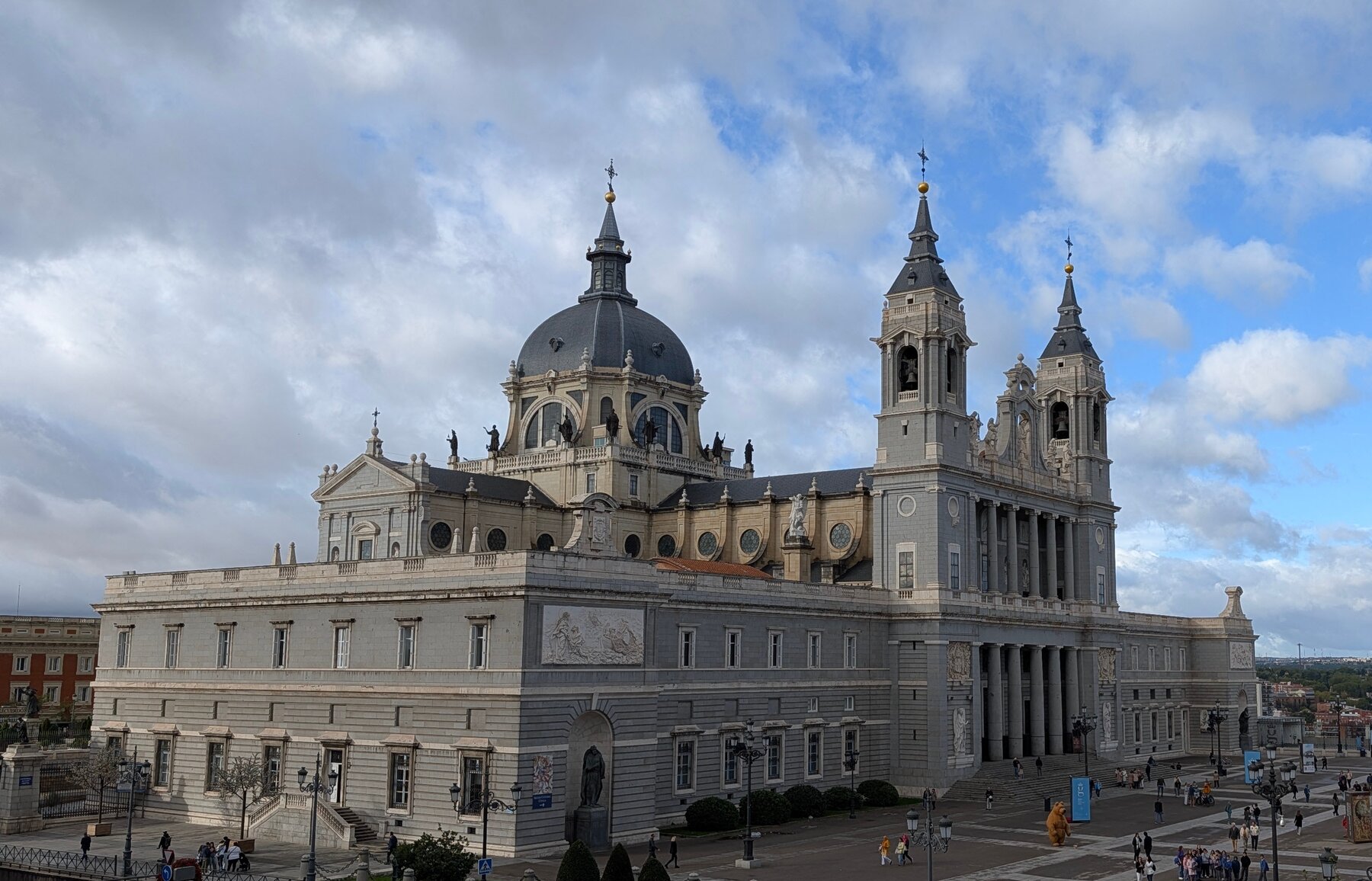
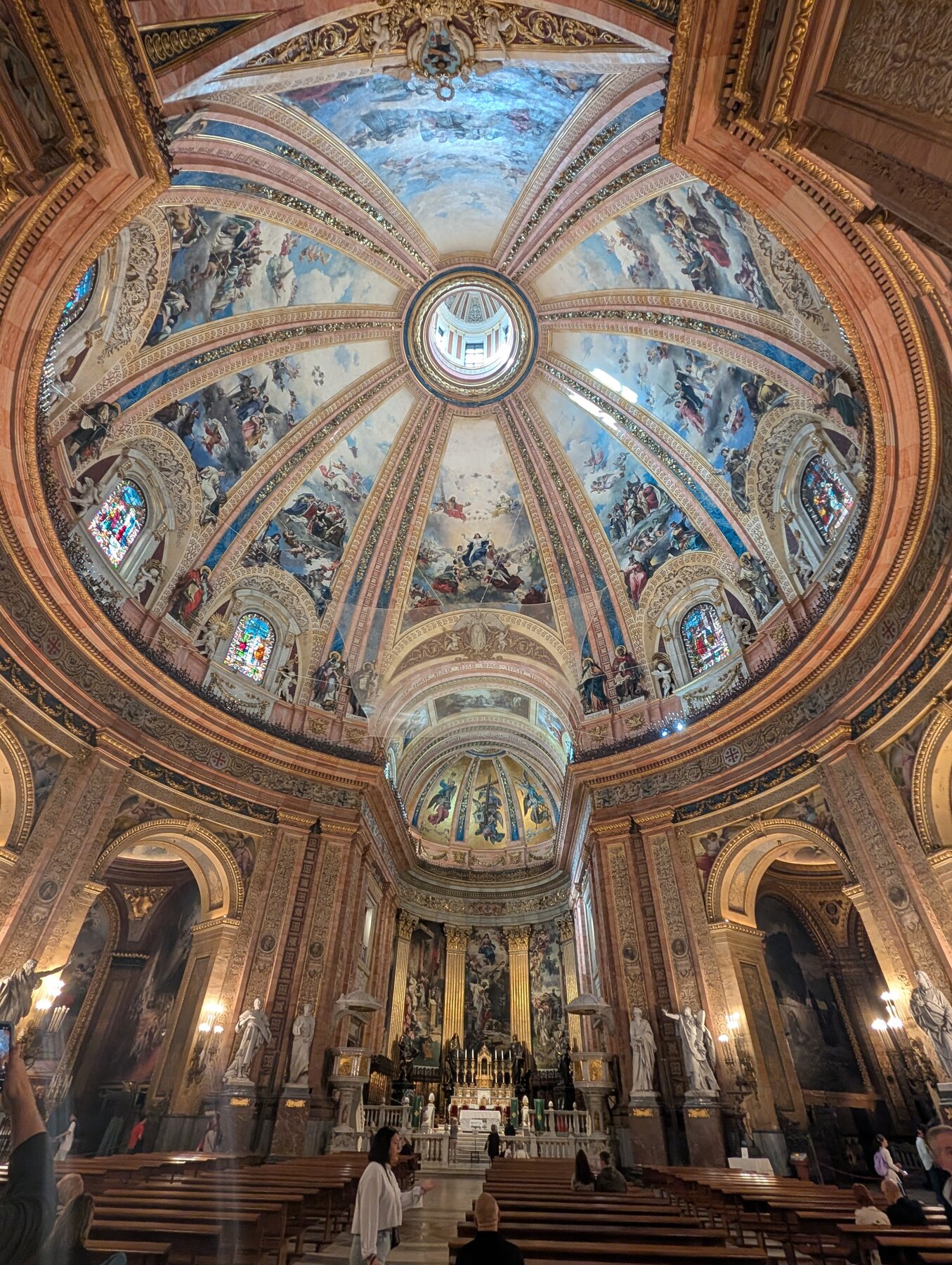
The cathedral took 110 years and three architects to finish, and you can feel the committee in the result. The Real Basílica de San Francisco el Grande, which we stumbled onto later that day, is the opposite — one dome, one idea, no compromise.
After weeks of heavy Baroque gilt in Seville and elsewhere, the late 18th-century neoclassical interior was a relief: clean lines, balanced proportions, and a dome that’s the largest in Spain.
The interior lets space and light do the work instead of burying every surface in gold.
Reina Sofia — The Modern
We visited both the Prado and the Reina Sofía during our first Madrid stay. The Prado was a revisit for both of us, but we caught only a few highlights at the end of a long day — we knew we weren’t doing it justice. The Reina Sofía was new to both of us, and got the better share of our attention.
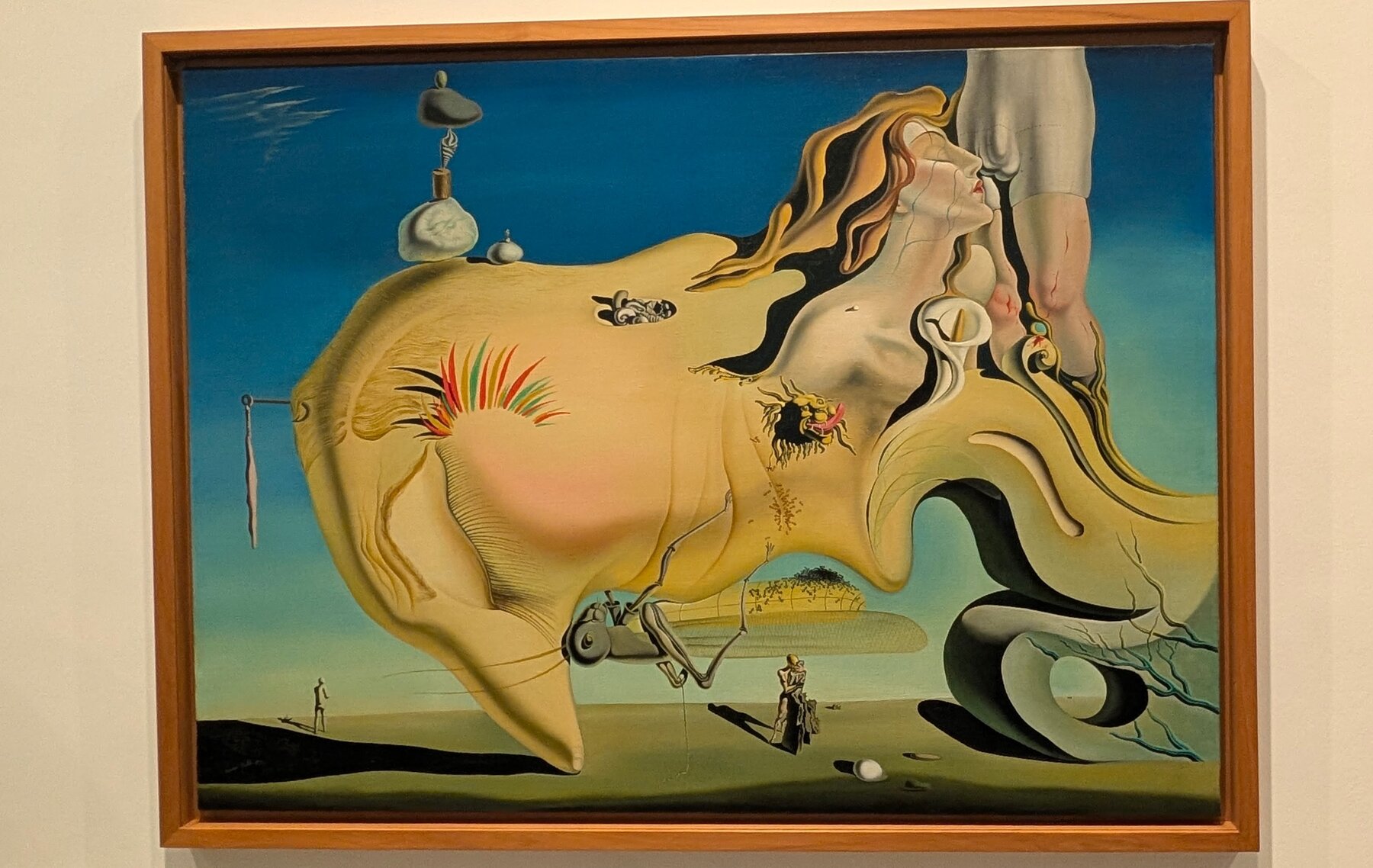
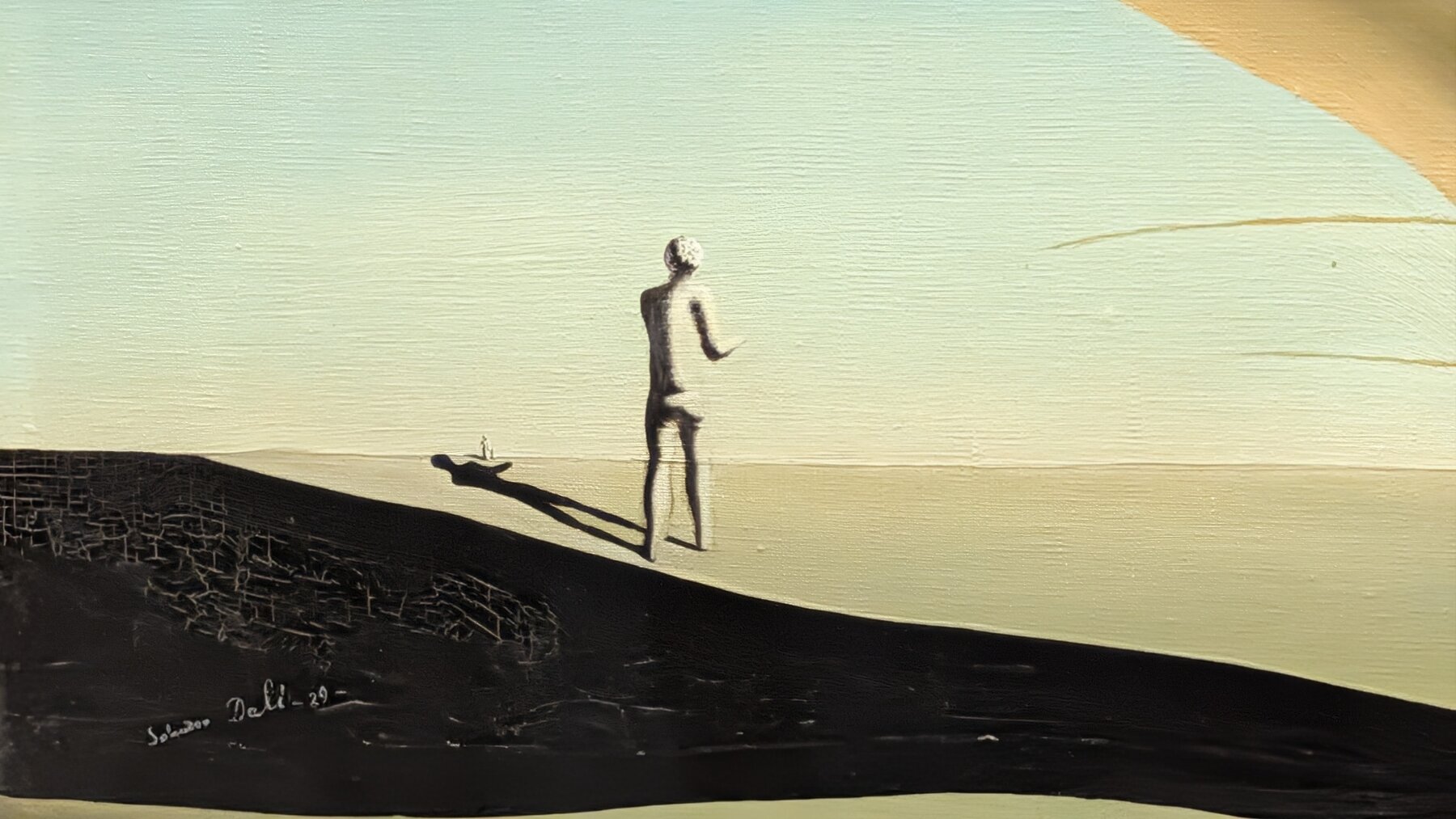
The Reina Sofía holds a strong collection of Dalí, though not the greatest-hits version most people picture. The works here cluster around his late-1920s Surrealist phase — earlier, stranger, and more personal than the melting clocks. They’re worth seeking out before you reach Guernica, not after.
But the reason you go is Guernica. Picasso refused to let it display in Spain while Franco was alive, so it hung in New York until 1981 — which means it’s possible Kevin saw it as a child without quite registering it. We each thought we knew it.
Seeing it in person, the scale stops you: it’s nearly 12 feet tall and 25 feet wide, and the grey tones that read as flat in reproduction have a texture and weight that photographs don’t capture.
Our guide walked us through it left to right, and details we’d missed in years of looking at reproductions came into focus.
The horse’s body is covered in small hatch marks that resemble newspaper columns — Picasso first learned of the bombing through press reports, and he put the medium right into the paint. At the bottom, in the hand of a dismembered soldier, a tiny flower grows next to a broken sword. It’s the only hopeful thing in the painting, and it’s small enough that only a guide called our attention to it.
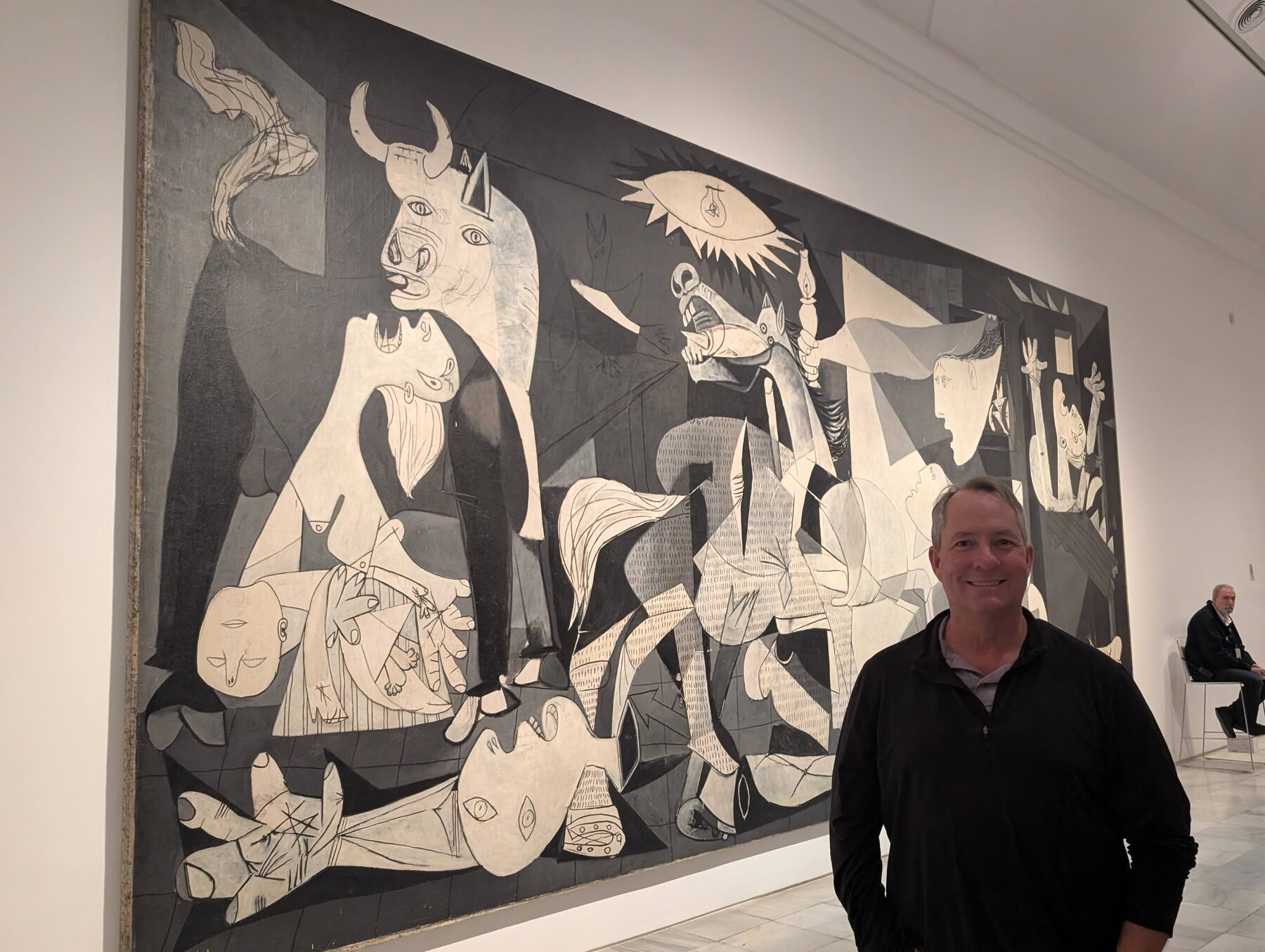
It was the one thing in Madrid we gave proper time to, and the details repaid it — we’d have walked past the flower without the guide, and never noticed the newsprint in the horse.
Picasso in Guernica is processing a war; Dalí in the same building is processing himself. The museum is better for holding both.
Prado — Two Hours, Several Masterpieces
The Prado is a 15-minute walk from the Reina Sofía, but centuries away. We gave it less than 2 hours and knew it wasn’t enough. But even a sprint through one of Europe’s great collections turned up three paintings that stopped us.
Las Meninas rewards getting close — closer than the guards prefer, as Kevin discovered. From across the room, the lace on the Infanta’s dress looks like fine silk. Up close, it’s loose slaps of white paint, pure abstraction that resolves into fabric only when you step back. And the mirror on the far wall reflects the King and Queen, which means they’re standing exactly where you are. You’re not just looking at the painting; you’re filling the shoes of the most powerful people in the 17th-century world.
Bosch’s Garden of Earthly Delights pulls you in with color and holds you with dread. The right panel — the Hell scene — is cold and black after the hallucinogenic greens of the center. Look for the man crushed under a giant lute in the lower left: Bosch painted an actual musical score on his backside. Historians have transcribed it. It’s as grim as you’d expect.
Goya’s Third of May 1808 hangs near his Black Paintings and shares their raw hopelessness. The firing squad has no faces — not one visible eye or expression. They’re not men; they’re the mechanism. Nearby, his Saturn Devouring His Son is worth comparing to Rubens’ version elsewhere in the Prado: Rubens painted a powerful god, Goya painted a terrified old man who looks more frightened than what he’s eating.
The Return Stay
After two weeks in Andalucía, Madrid was a jolt — bigger, faster, less personal. A different country almost. We stayed in a new neighborhood and came with different priorities.
We considered a second pass at the Prado, but after two weeks of Spanish art across multiple cities, we wanted something that predated all of it. The National Archaeological Museum (the MAN) goes back 10,000 years, and after the Prado’s density, its chronological layout felt easier to navigate. The renovated courtyards, now covered in glass, flood the larger stone pieces with natural light and give you room to breathe between the denser galleries.
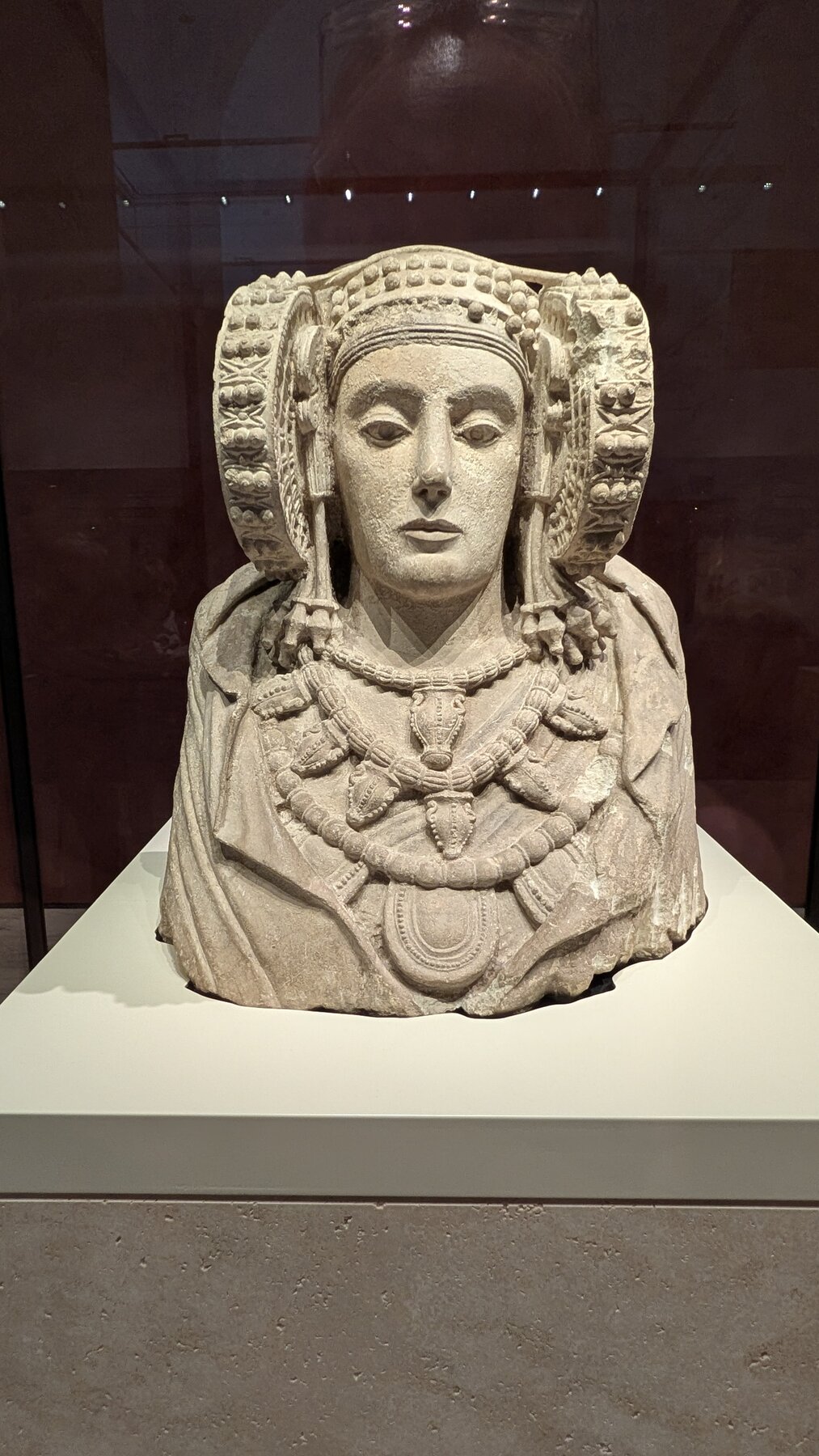
The Lady of Elche — probably a funeral urn, 5th century BCE, found by farmers clearing a field in 1897 — is the piece that stops most visitors. Though she is bare limestone today, she was once painted in red and blue — the effect would have been much closer to a face staring back at you than the austere sculpture you see now. The eyes feel less carved than set, as if they were meant to meet yours. The elaborate side coils read as something ceremonial and unfamiliar — almost mask-like.
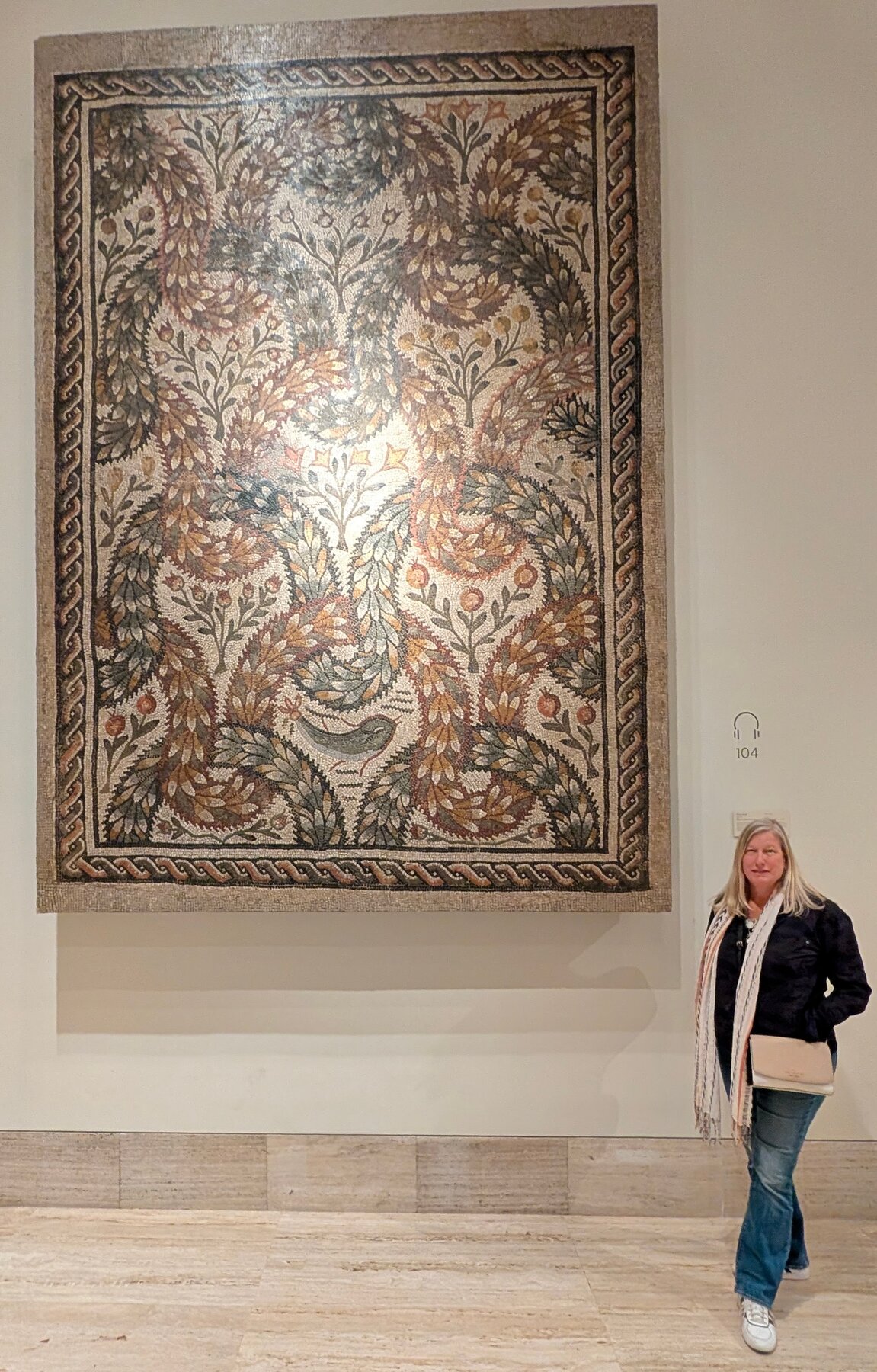
The collection of Roman mosaics took us by surprise. The MAN has dozens of them, lifted from villa floors across Hispania and mounted on the walls. The shift in orientation changes how you see them — what was designed to be walked across is now hung at eye level, and details that would have blurred underfoot come into sharp focus.
Up close, they’re rough grids of stone chips. Step back and a partridge appears in a vine scroll, pomegranates hang from branches, a geometric border frames the whole scene like a carpet edge — which is exactly what these were.
The museum’s clean modern lighting makes the earthy palette pop in a way the original owners never saw. In a candlelit Roman dining room, the effect would have been warmer and softer — less museum piece, more living room.
Two hours in the MAN covered more ground than we expected — and reminded us how much of Madrid we’d been driving past without stopping.
Where We Stayed
We stayed in different neighborhoods on each visit, which worked well.
On our first stay, Gran Hotel Inglés sits in the Barrio de las Letras — Madrid’s Literary Quarter — and the neighborhood made the hotel choice for us. The streets around it are narrow, lined with independent bookshops rather than chains. By evening, vermouth and tapas spill onto sidewalks without ever getting loud.
The hotel itself is Madrid’s oldest, but the recent renovation avoids the usual “historic hotel” stiffness — it’s sharp, Art Deco-inflected, and feels lived-in rather than preserved.
For the return, the Hotel Fénix Gran Meliá is a bit further from the tourist center but a 5-minute walk from the Archaeological Museum.
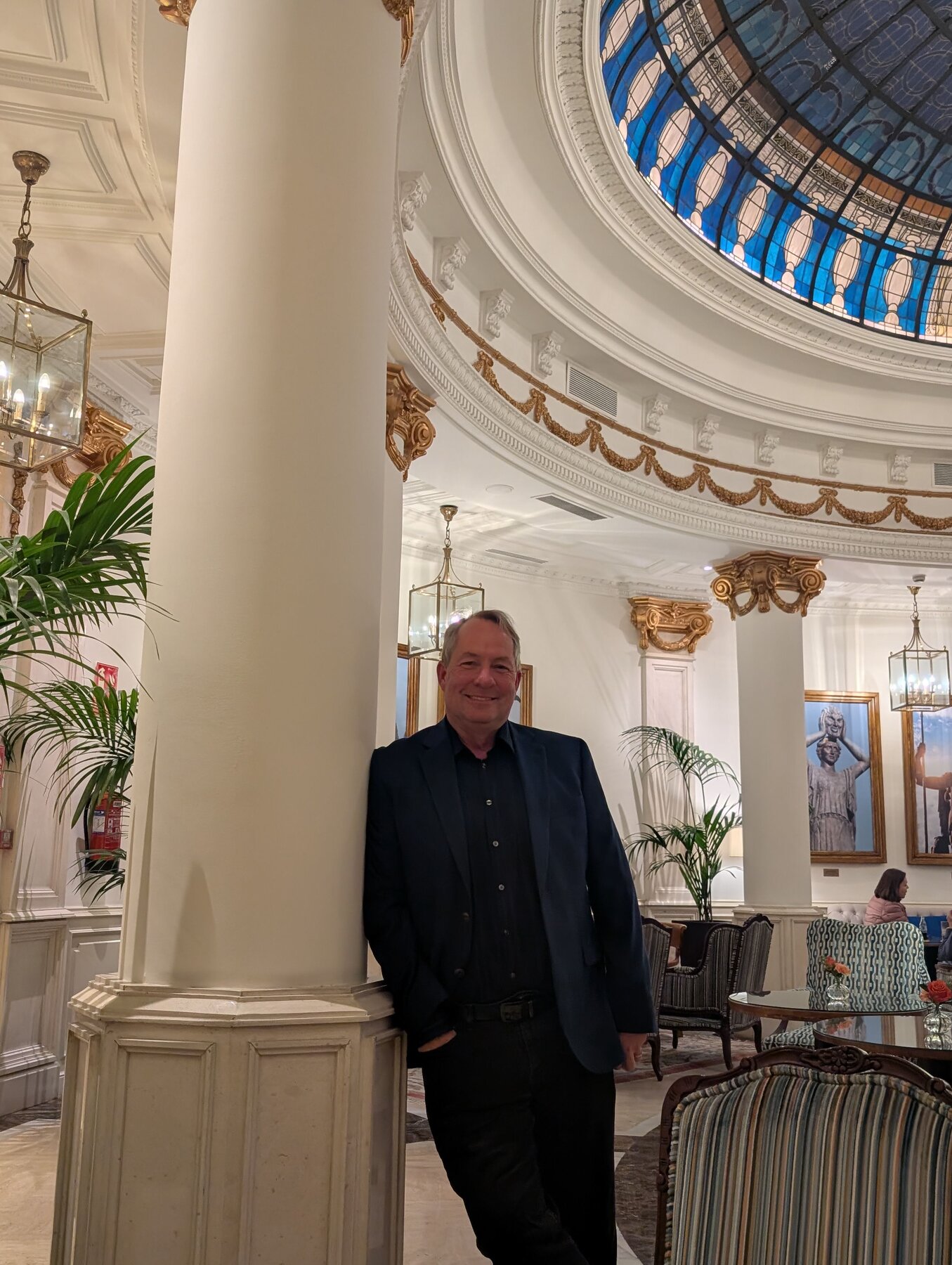
The lobby sets the tone: a stained-glass dome that throws colored light across marble floors, with a rotunda scaled more like a palace entrance than a hotel reception. It’s the kind of space that makes you want to dress for it. We did. Spanish locals seem to feel the same way — a scarf, a jacket, some deliberate choice.
We didn’t eat memorably in Madrid. Our first night we arrived bleary-eyed from the airport and ate at the hotel. On the return, after 15 days on the road, we chose the hotel’s sushi — the kind of decision that tells you where you are in a trip, not where you are in a city. Madrid’s restaurants deserve better than we gave them, which is another reason to come back.
Practical Tips
Madrid is a city of distinct hubs, not a single walkable core like Seville or Granada. The Royal Palace and Almudena Cathedral are a 20-minute drive from the art district around the Prado, Reina Sofía, and Archaeological Museum. A tuk-tuk tour is a good way to connect them — our hotel, the Gran Hotel Inglés, arranged ours.
Direct flights from the US to Seville or Málaga are limited and expensive, which is how Madrid became our gateway. The high-speed trains south meant the connection cost us hours, not a day.
The Prado deserves more time than we gave it. We spent under 2 hours sprinting between highlights and left overwhelmed more than enriched. If we go back, the Prado gets much of a day to itself.
Madrid was the one city on this trip we knowingly underspent. We came expecting a gateway; we left knowing it was a destination. Next time, Madrid gets the full visit it deserves.
🥜 Madrid in a Nutshell
Madrid in Pictures
3 Photos
Share Your Thoughts
We'd love to hear about your experience!