Ronda
Overview
Ronda may be the most famous of Andalusia’s Pueblos Blancos — and unlike many famous places, it actually earns the reputation. Most visitors day-trip from Seville or Málaga. They’re missing the point. The bridge alone justifies the overnight.
The Gorge and Bridge
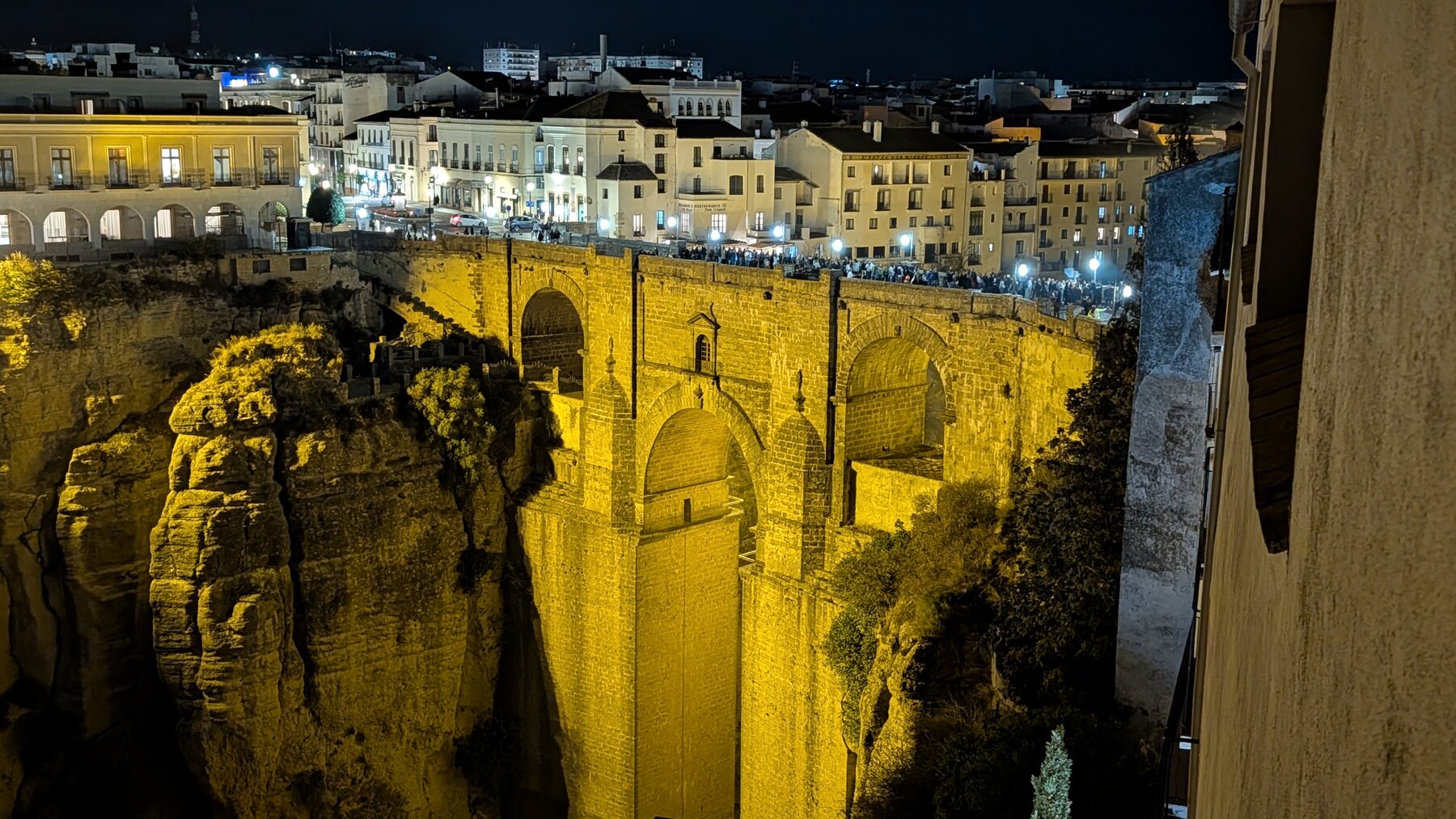
The Puente Nuevo — “new bridge,” built in 1793 — spans a 400-foot gorge that splits old Ronda from new. It photographs well and then exceeds the photograph in person. At night, floodlit from below, it’s genuinely hard to look away.
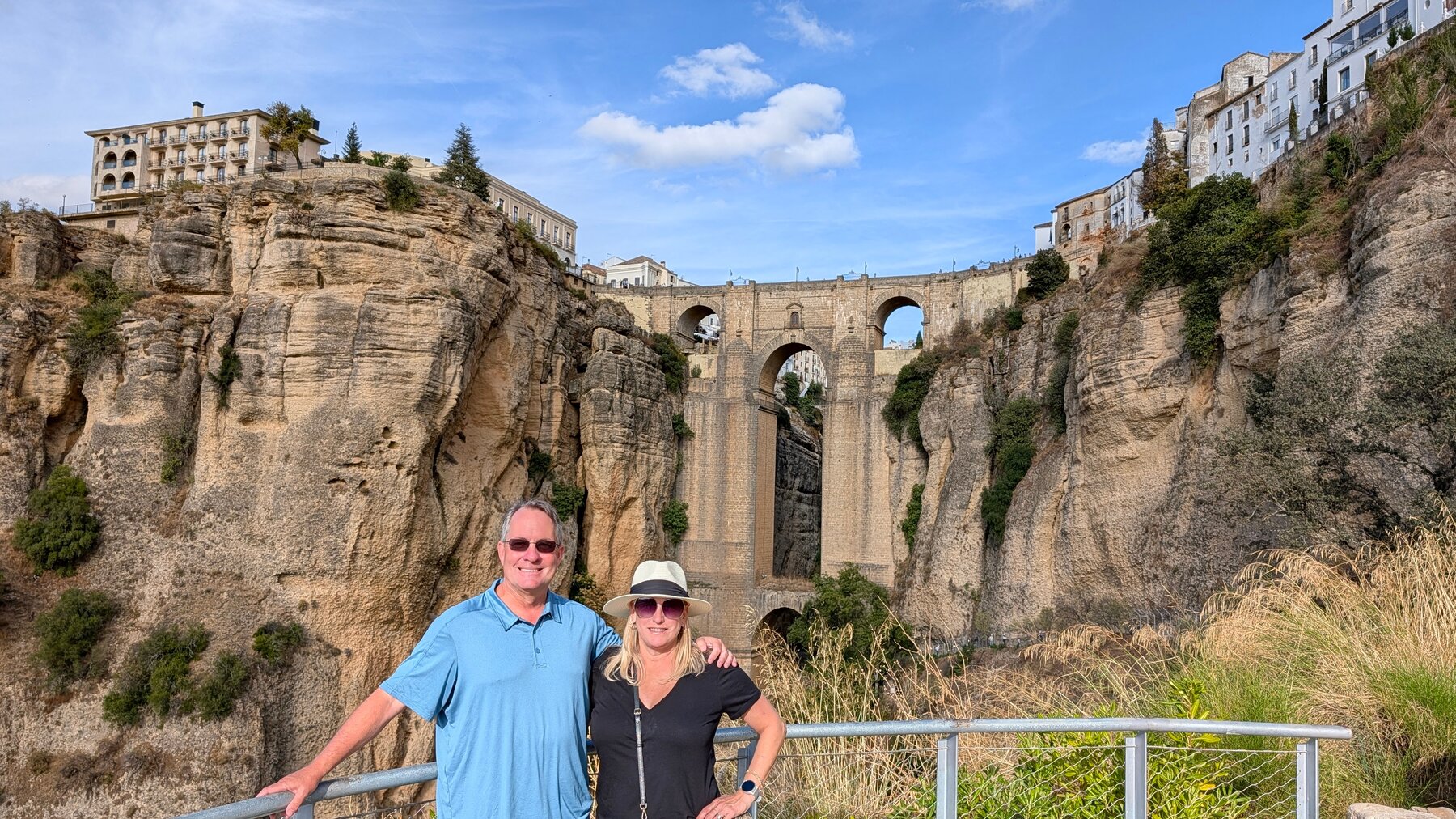
A path winds down from the old town to several viewpoints along the gorge, and it’s not obvious where to stop. Partway down the gorge is a paid attraction called Tagus Gorge. We paid about €5 for access — a bargain. There are viewpoints lower in the gorge, but the heat made this one feel like enough.
The gorge isn’t just a view — it’s how Ronda works. The old town sits on one side, the new town on the other, and the drop between them keeps reappearing: at the end of an alley, behind a restaurant terrace, through a gap in a wall. You stop planning where to walk and start following wherever the next glimpse opens up.
Beyond the Gorge
We were there on Halloween, which turns out to be worth knowing about. The town center was full of kids trick-or-treating in the downtown shops, while parents chattered happily. The bridge was lit up behind a queue of children waiting for a haunted house.
Halloween is apparently rapidly overtaking Día de los Muertos as a Spanish holiday — something we didn’t expect to learn in an 18th-century Andalusian hill town.
Ronda rewards wandering. Lookouts appear around most corners — some are busy plazas, others are quiet stone ledges where you’ll have the gorge to yourself. The old town is compact enough that getting lost takes effort.
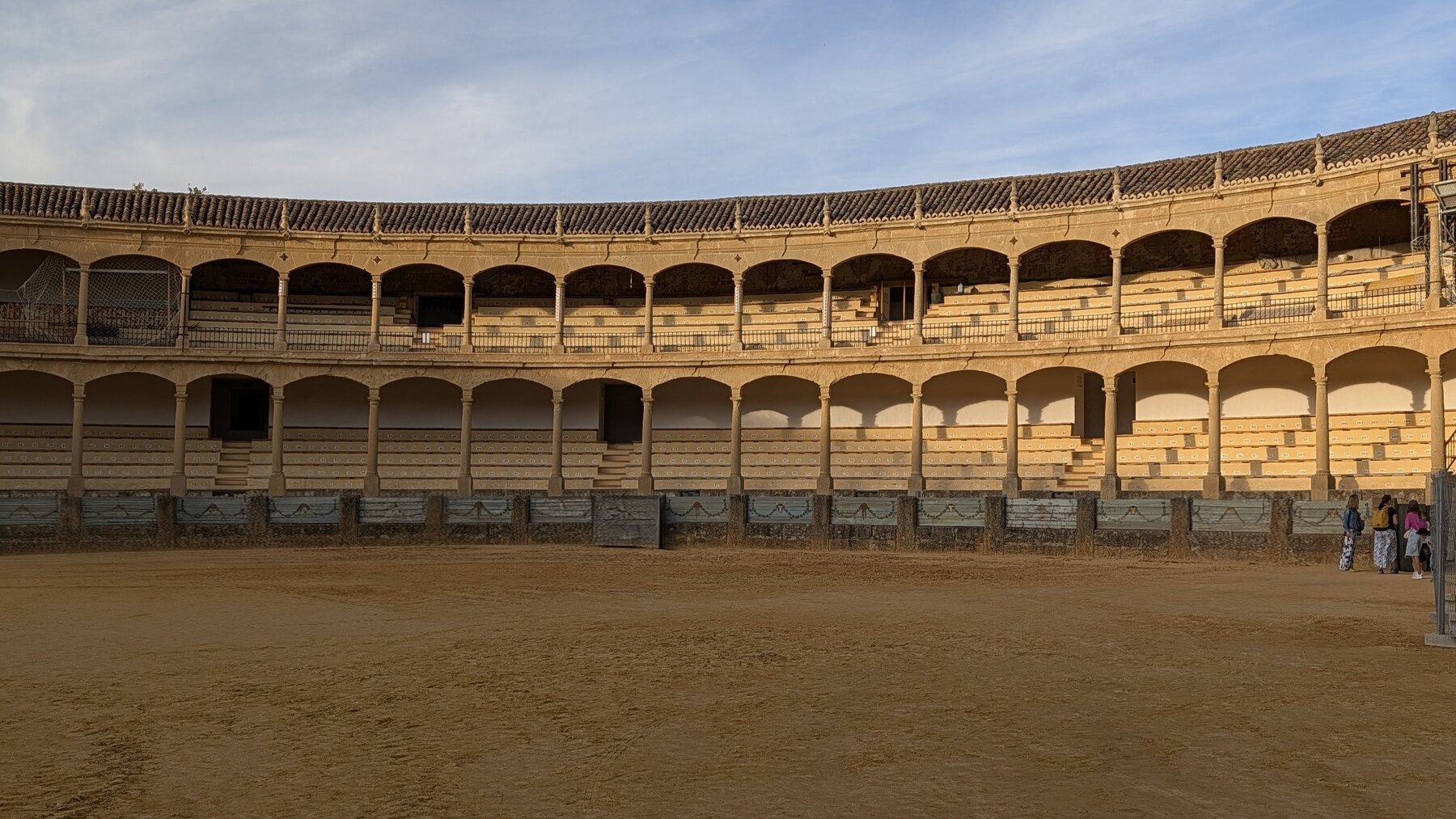
The Plaza de Toros, the Ronda bullring, was the first one constructed in Spain, in the late 18th century. There is only 1 “fight” there per year now, which we thankfully did not encounter.
An Hour with Paco Seco
We saw Paco Seco perform at Ronda Guitar Music the evening we were there. The venue is a small street-front room — maybe 20 seats — with handcrafted guitars lining the walls. Paco Seco and his wife Lucy greeted us at the door, immediately calling out “Kevin & Tiffany!” as we were the last to arrive.
Paco played 4 or 5 different guitars during his set, and the differences weren’t subtle.
A cypress flamenco guitar snaps and bites; a cedar classical guitar fills the room with something warmer and deeper.
He introduced each one with stories about the wood and the maker, turning what could have been a recital into a conversation. A small glass of local Ronda wine helped.
The performance lasted only an hour. No stage, no amplification, close enough to see the calluses on his fingers. It’s the kind of intimate experience that only works at that scale.
Where We Stayed
We stayed at Hotel Montelirio. It’s a lovely hotel, but the real reason to book it is the gorge view. Book a room facing the bridge; the difference between that and a standard room is the difference between a good stay and a memorable one.
Food & Dining
Our restaurant luck in Ronda was less than perfect, so we have nothing to suggest here.
Practical Tips
Ronda is compact — 10–15 minutes across the tourist zone on foot. Parking is scarce and train access is limited, so a car shuttle or taxi drop-off works well. Once you’re there, you don’t need a car.
One thing we wish we’d planned for: Cueva Pileta a cave outside town with paintings tens of thousands of years old. We missed it in planning. By all accounts, it’s exceptional, especially for those (ahem) obsessed with ancient sites.
Share Your Thoughts
We'd love to hear about your experience!