Seville
Overview
Seville is the kind of city where our best moments came from wrong turns — a courtyard we weren’t looking for, a flamenco guitarist playing to no one in a side street, a tapas bar with no sign and four stools. We spent 4 nights there, and more than anywhere else on this trip, we wandered — through narrow streets that open unexpectedly into broad squares, past Moorish walls and orange trees, with no destination in mind. The historic old town is compact — maybe 15 minutes across on foot — which makes wandering the default mode of transport.
Getting lost is easy; staying lost is almost impossible.
Our hotel sat in the northern part of the medieval city, about a 10-minute walk from the Cathedral and Royal Alcázar — a good position that we’d replicate.
The Royal Palace
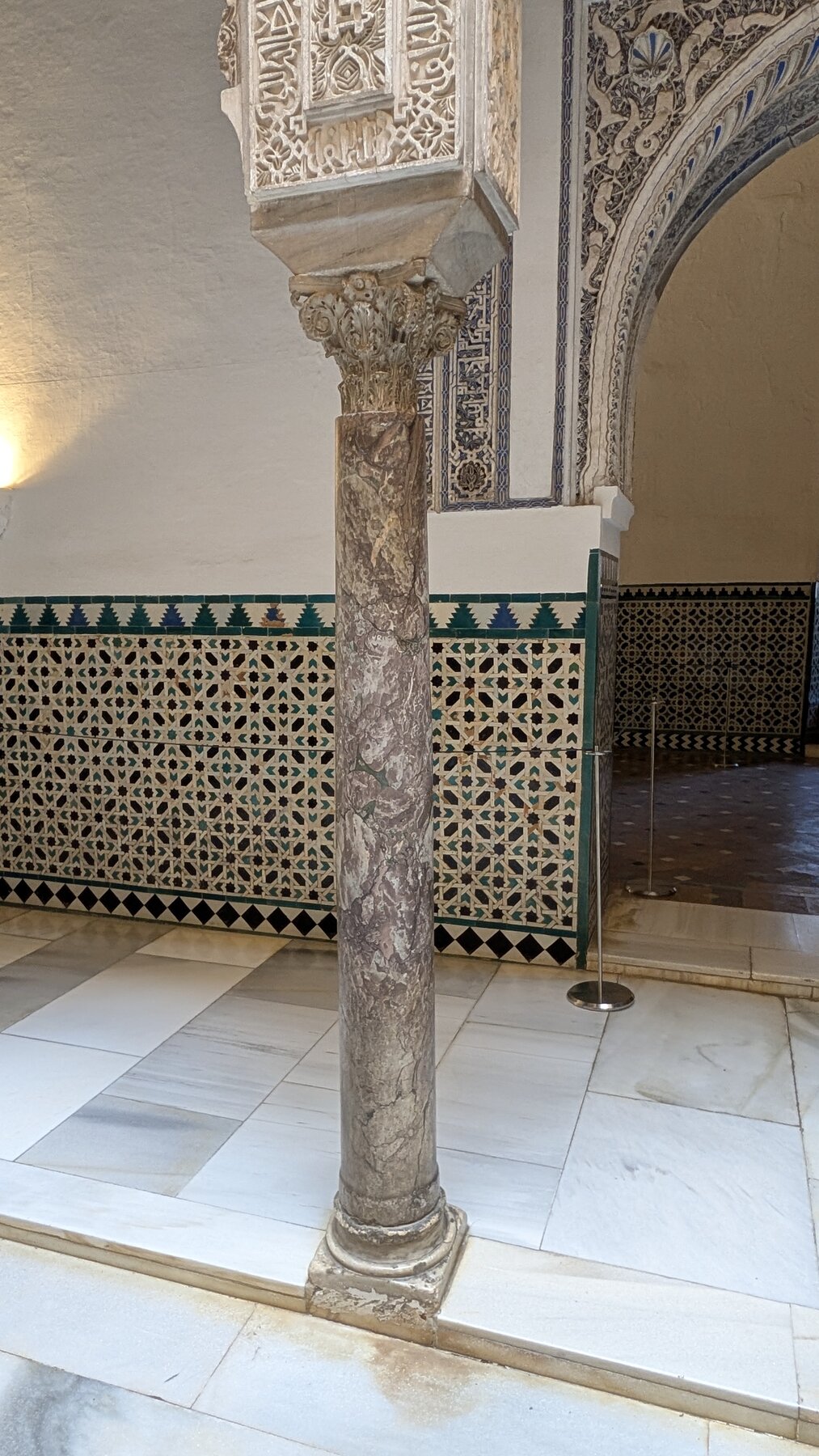
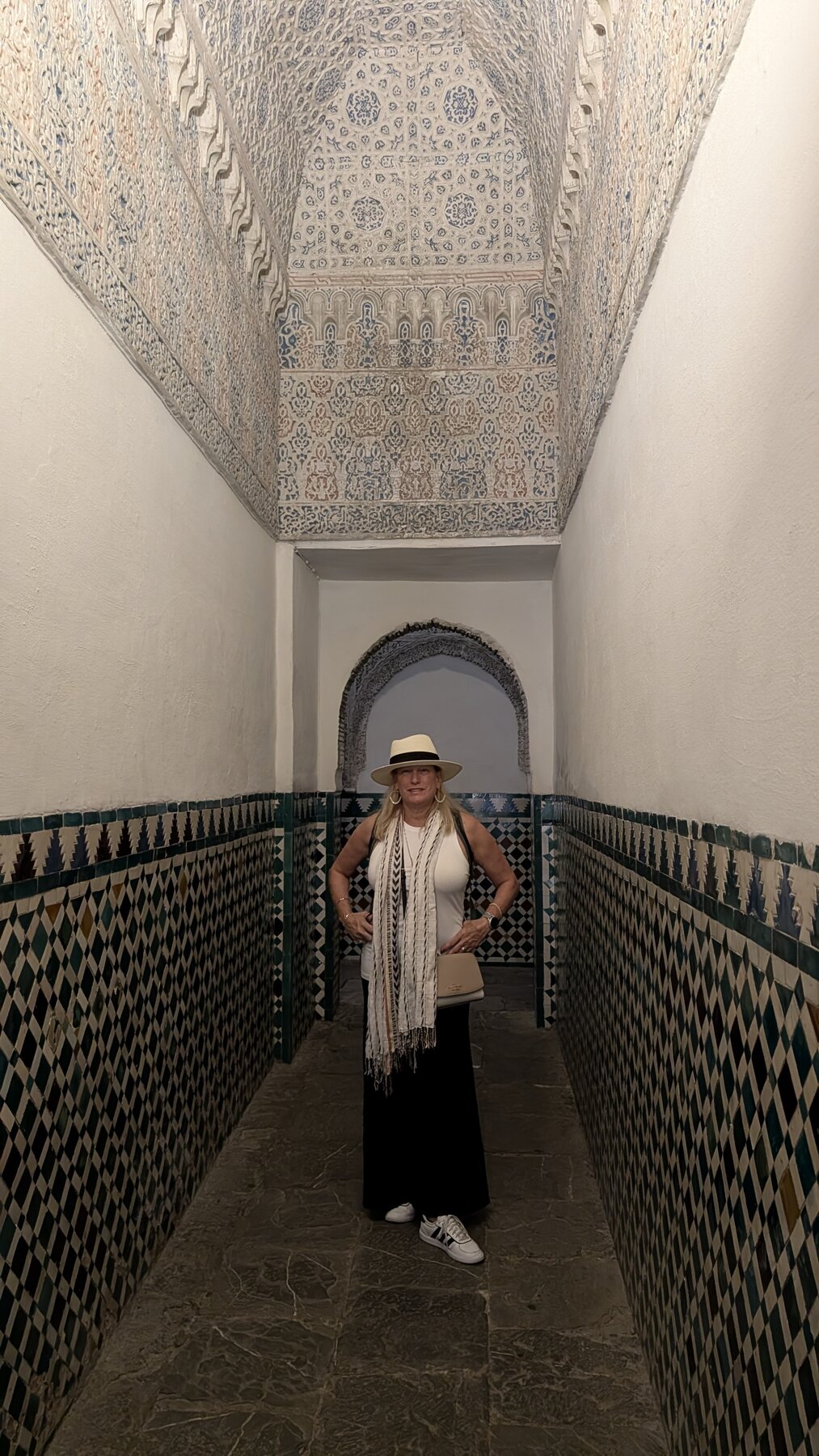
The Royal Alcázar was the highlight of our time in Seville, and the one site we’d tell anyone not to skip. The most famous sections were built in the 1360s by Moorish artisans still living in the city — decades after the Catholic reconquest. The result looks more like the court of a caliph than anything you’d expect from 14th-century Christian kings.
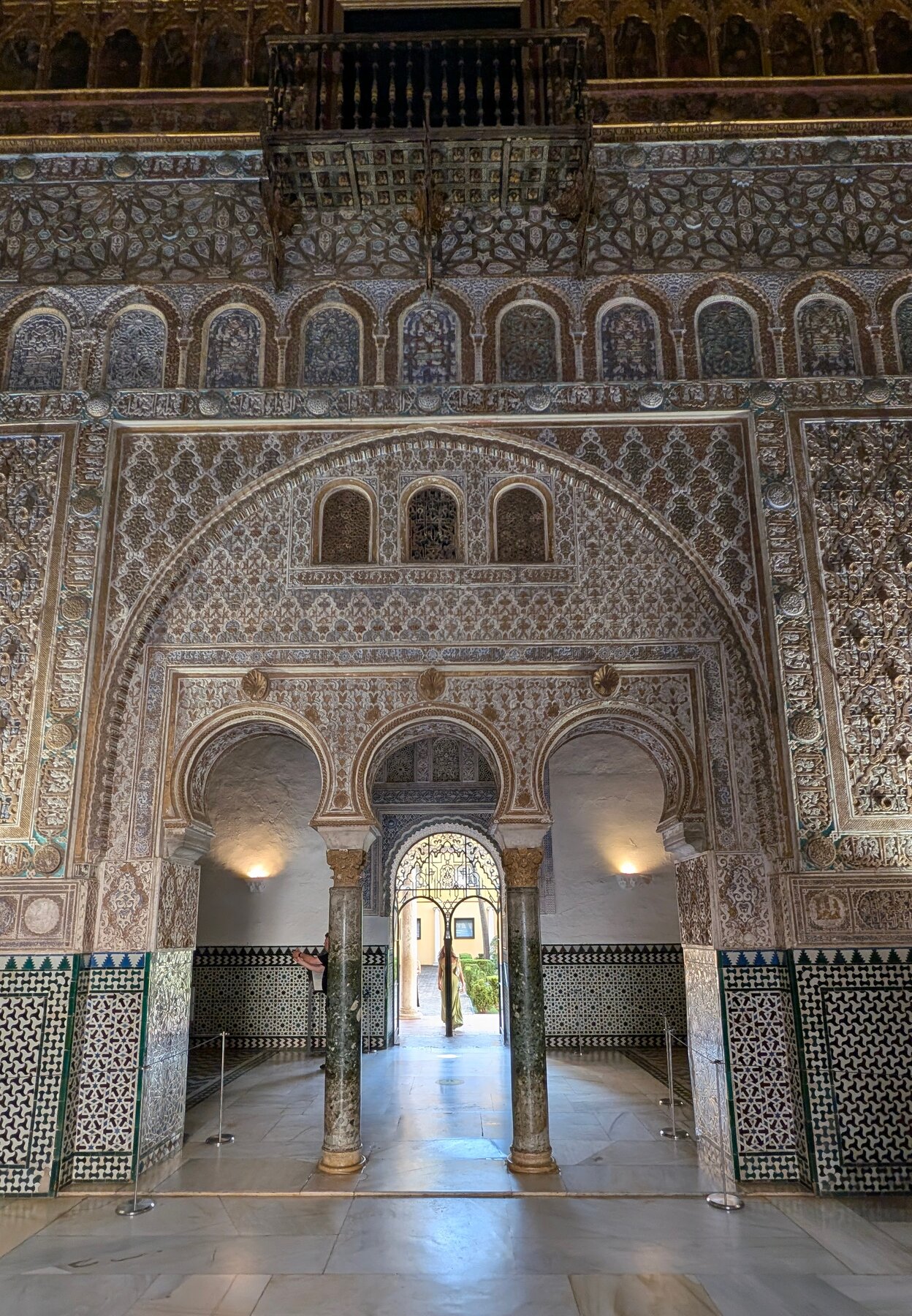
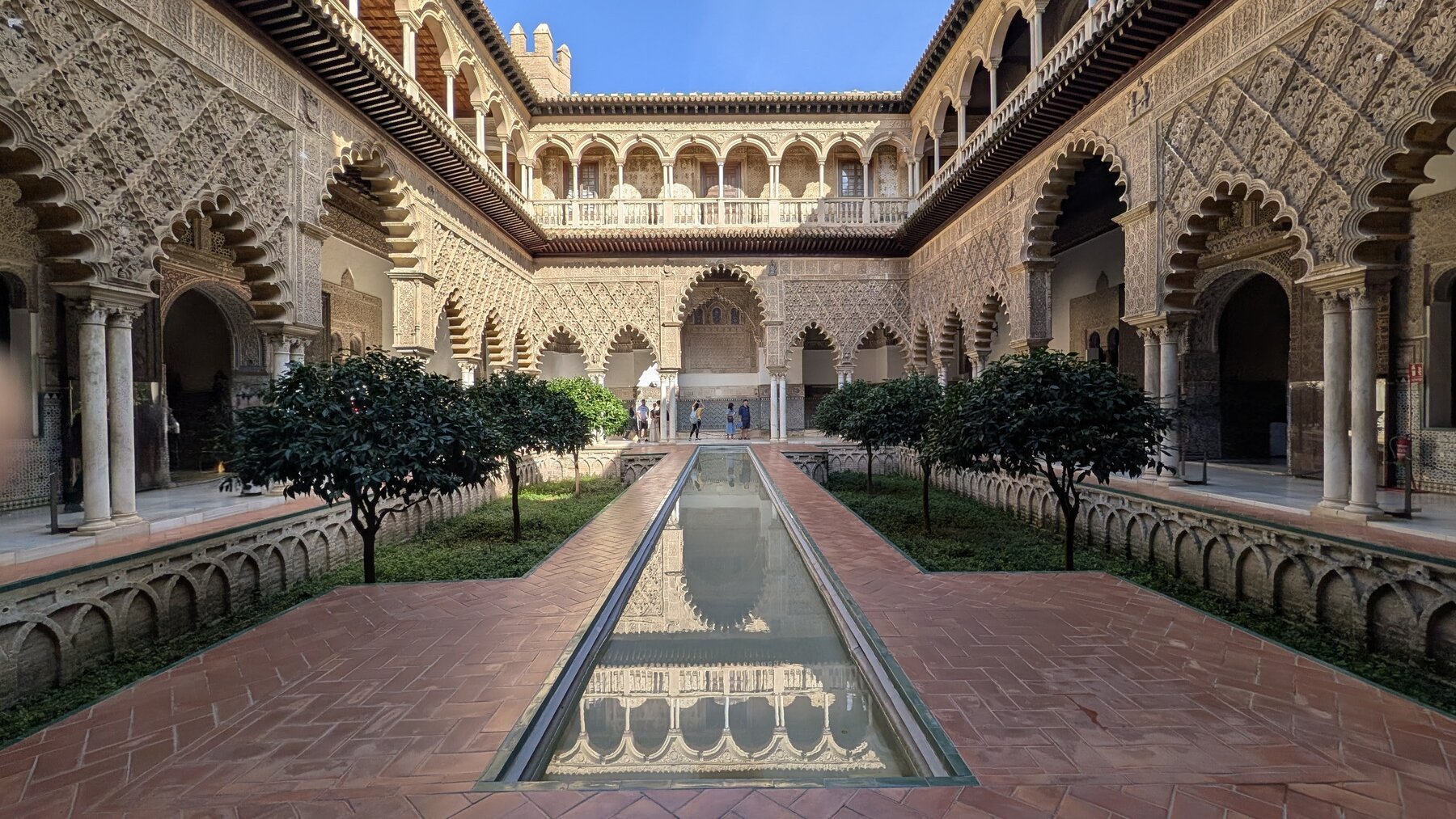
The Courtyard of the Maidens is the centerpiece of the Mudéjar Palace — a long reflecting pool flanked by arches with plasterwork so fine it looks like frozen lace. On a still day the pool doubles everything, and the space feels twice its actual size.
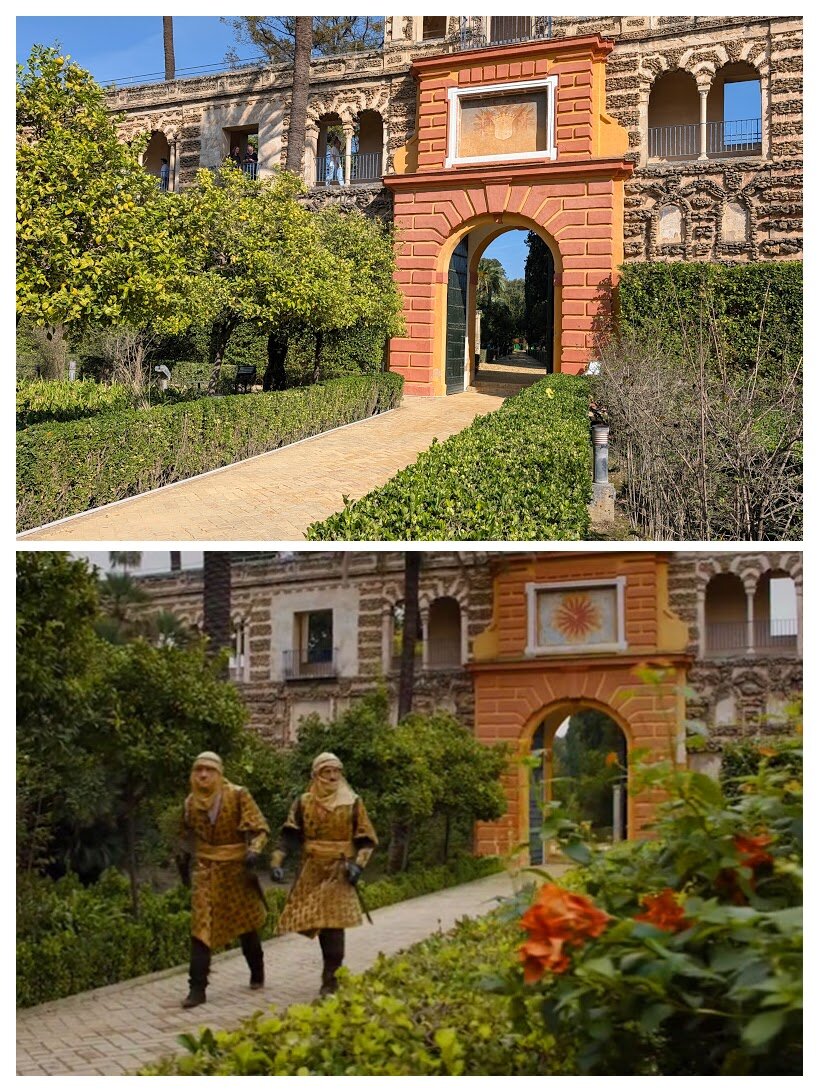
The Alcázar may look familiar — parts of it doubled as Dorne in Game of Thrones. We’d watched those scenes without realizing the setting was real. Standing in the same courtyards, the production design suddenly made more sense — they barely had to change anything.
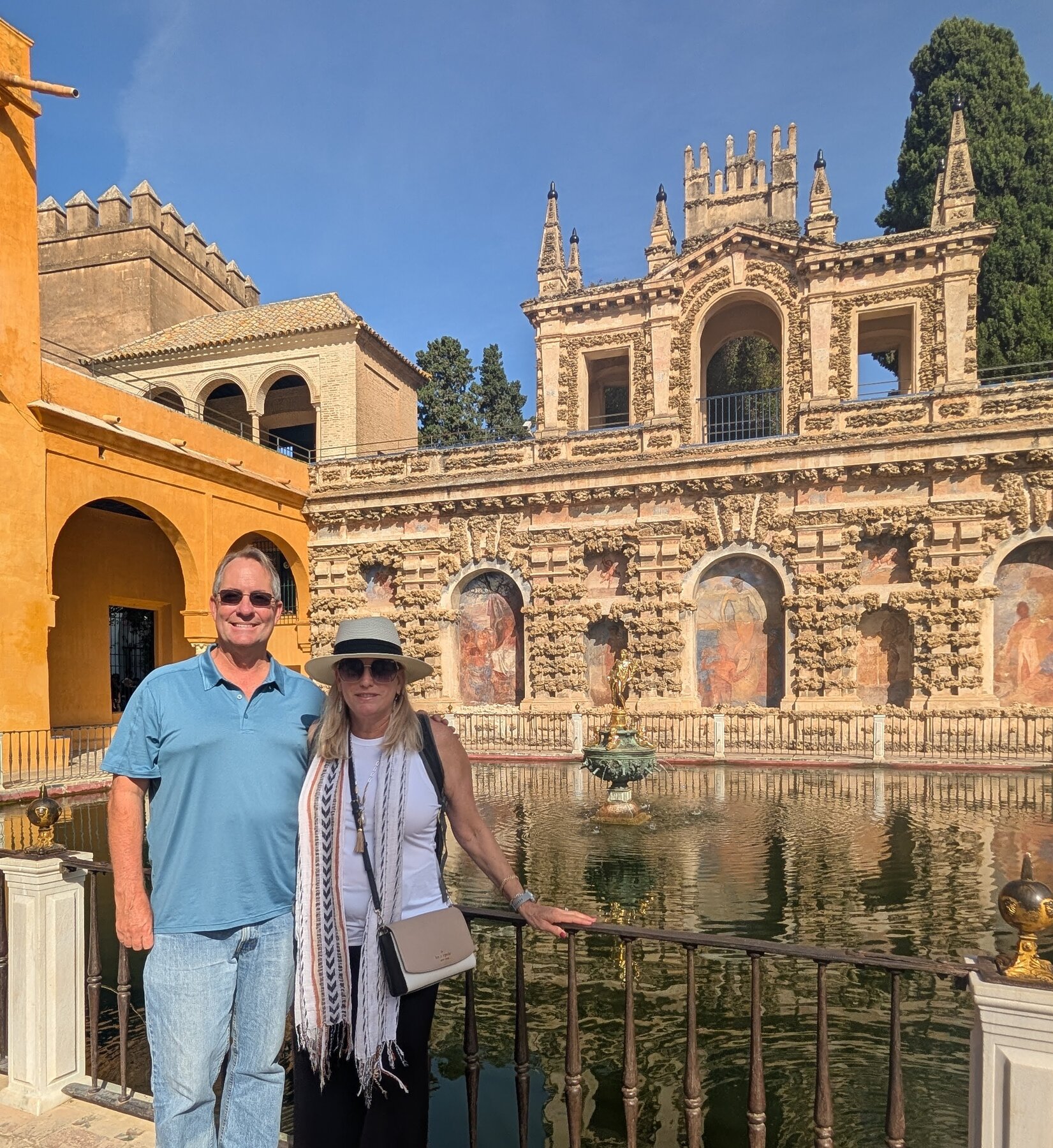
The gardens behind the Alcázar are worth as much time as the palace itself. They sprawl across several acres, shifting from tight Moorish courtyards with sunken flowerbeds to open Renaissance-era expanses — it feels as if each century added its own wing.
Water is everywhere. Hundreds of small fountains and channels create a constant low murmur that blocks out the city entirely. The older Moorish sections use thick stone walls and recessed beds to trap cool air — we noticed the temperature drop the moment we stepped in from the street.
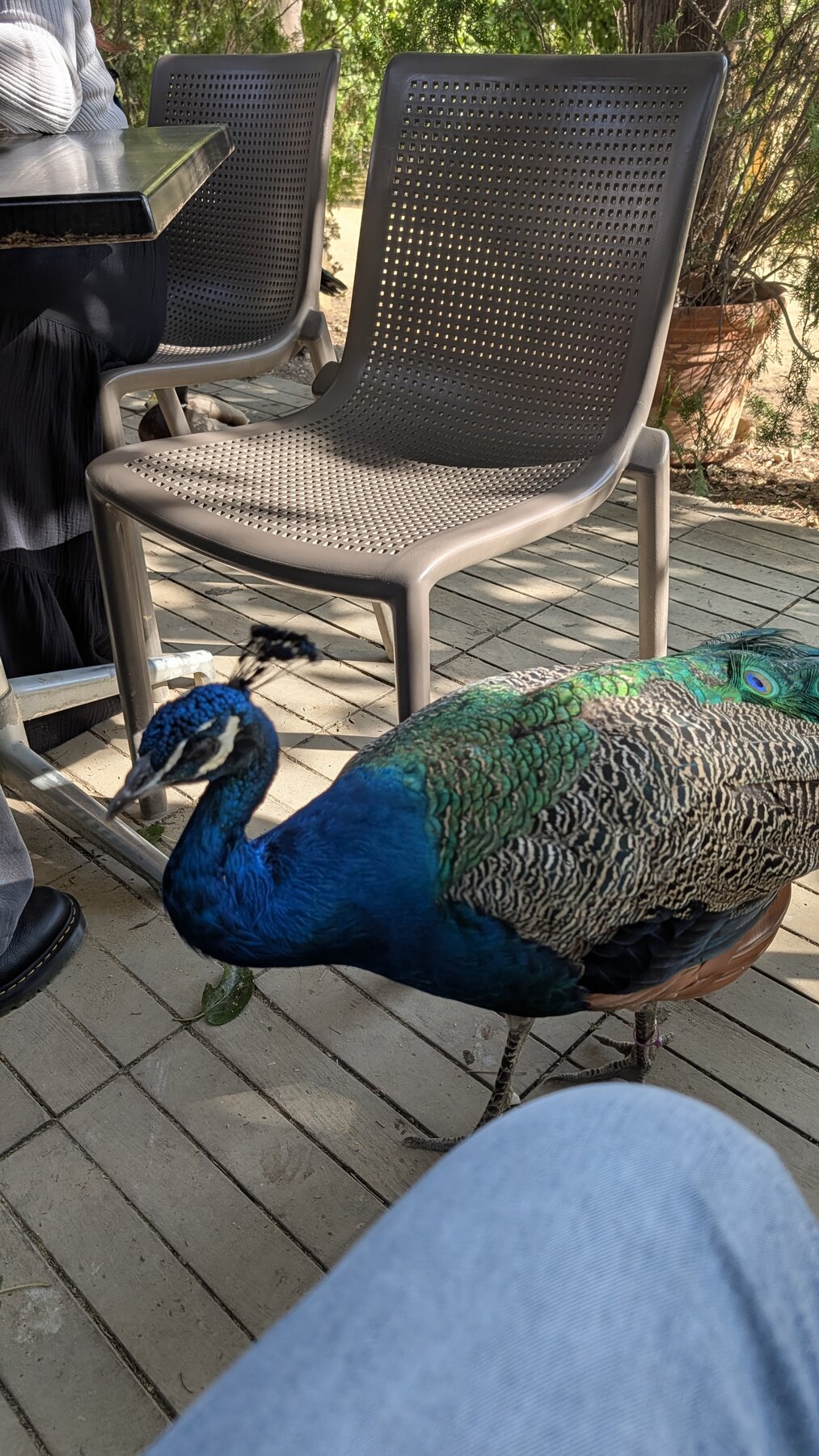
Resident peacocks wander through as if they own the place, which they effectively do.
Beyond the Palace
The rest of the old town can’t match the Alcázar, but it doesn’t need to.
Concepcion’s 3-hour walking tour — recommended by Rick Steves — covered the Cathedral and the old town.
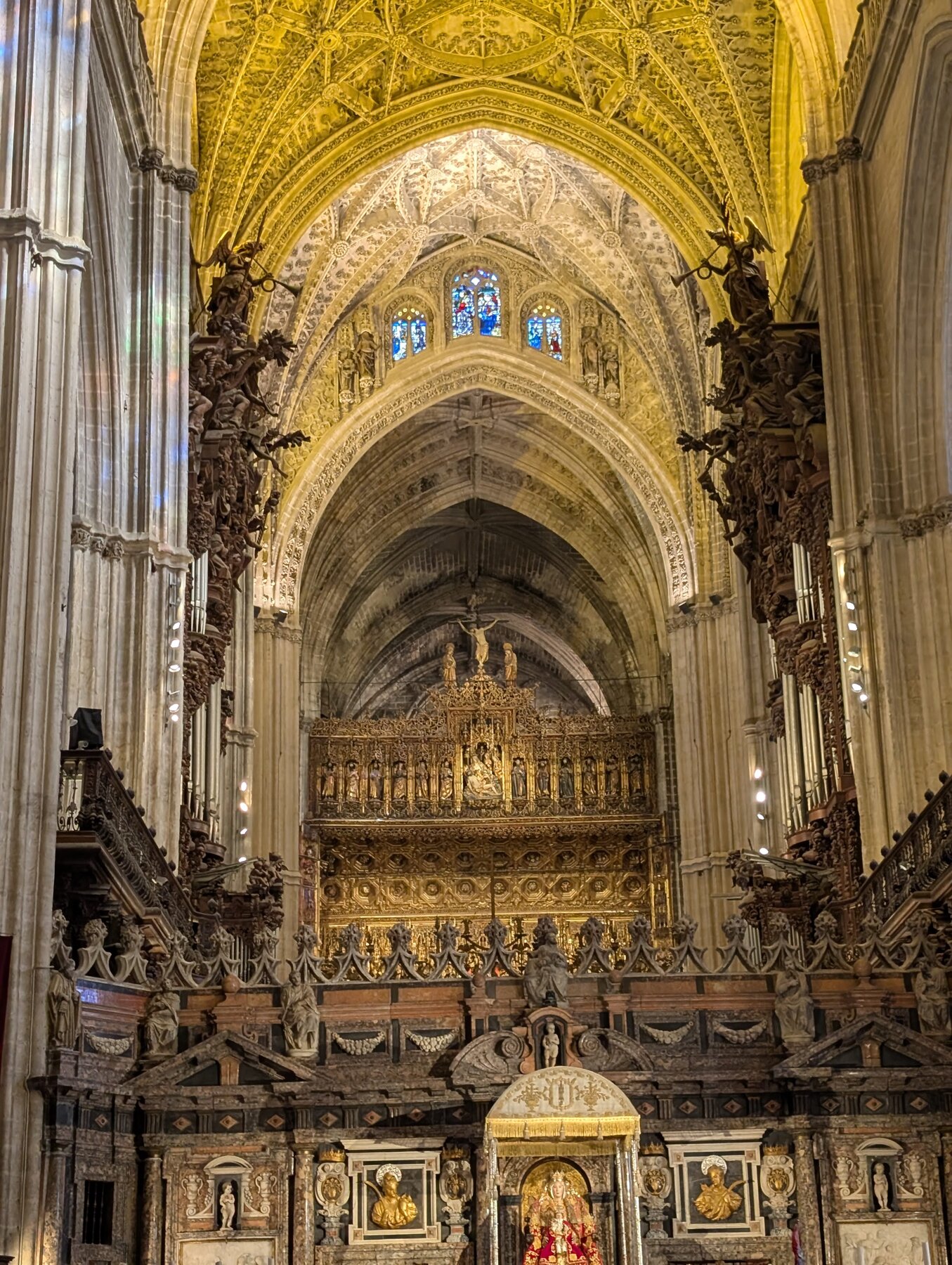
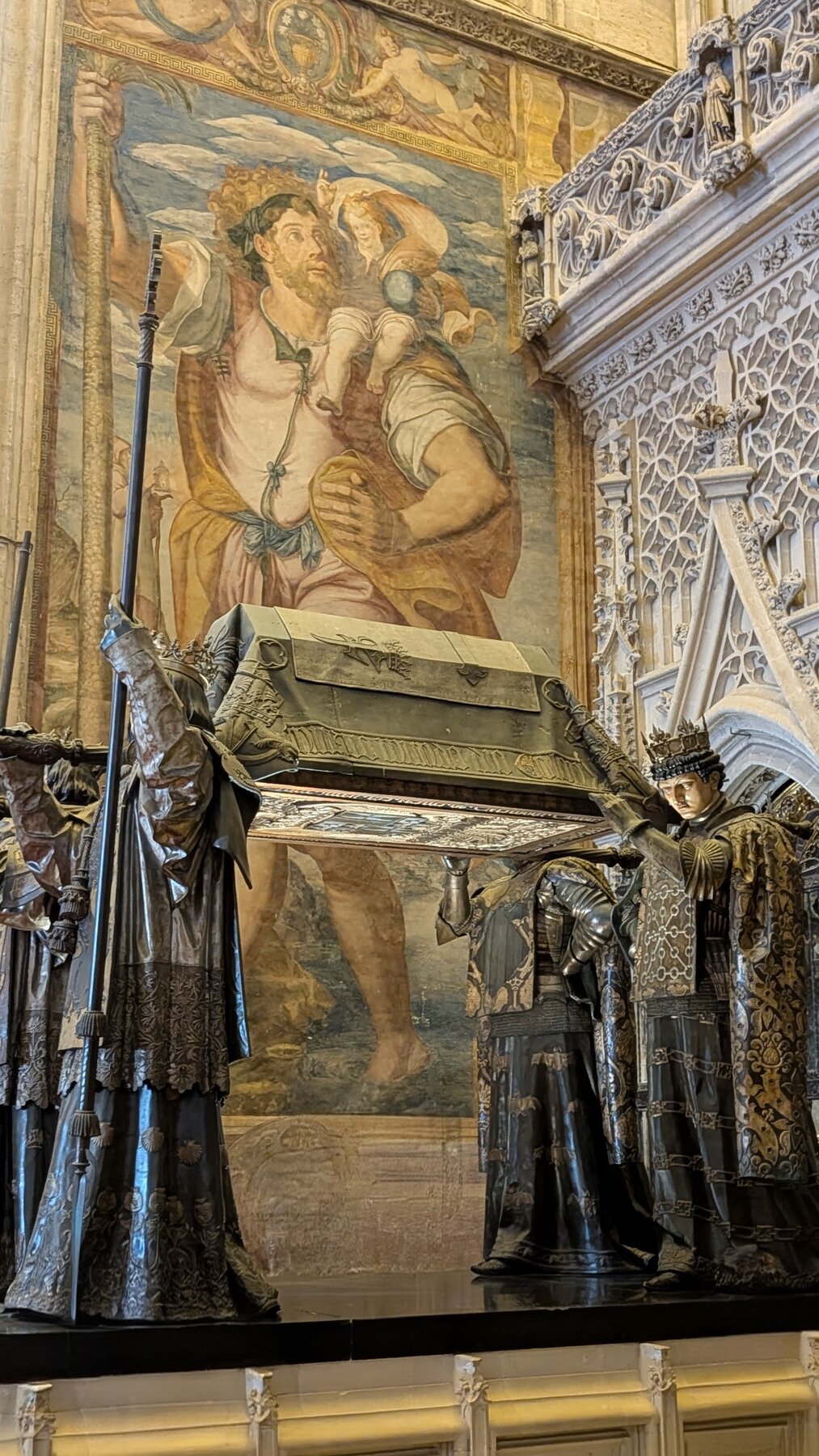
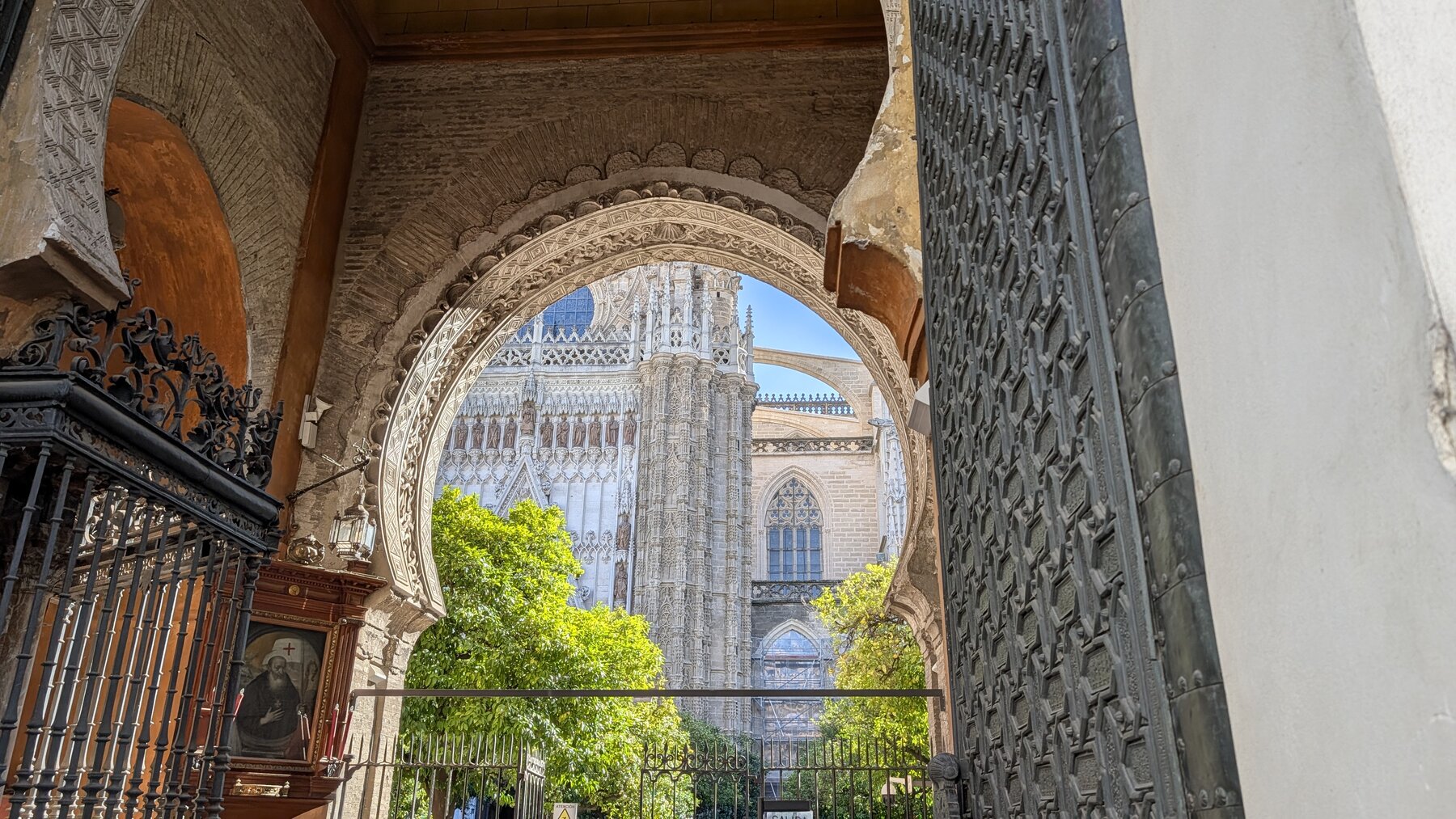
The Cathedral is the largest Gothic church in the world, and it looks it — the exterior commands the skyline from almost anywhere in the old town. The interior impressed us less. The nave is wide enough that stained glass light barely reaches the center, leaving the core dim and cool, and the scale reads more as engineering than beauty.
After the warmth of the Alcázar gardens, the shift is almost physical.
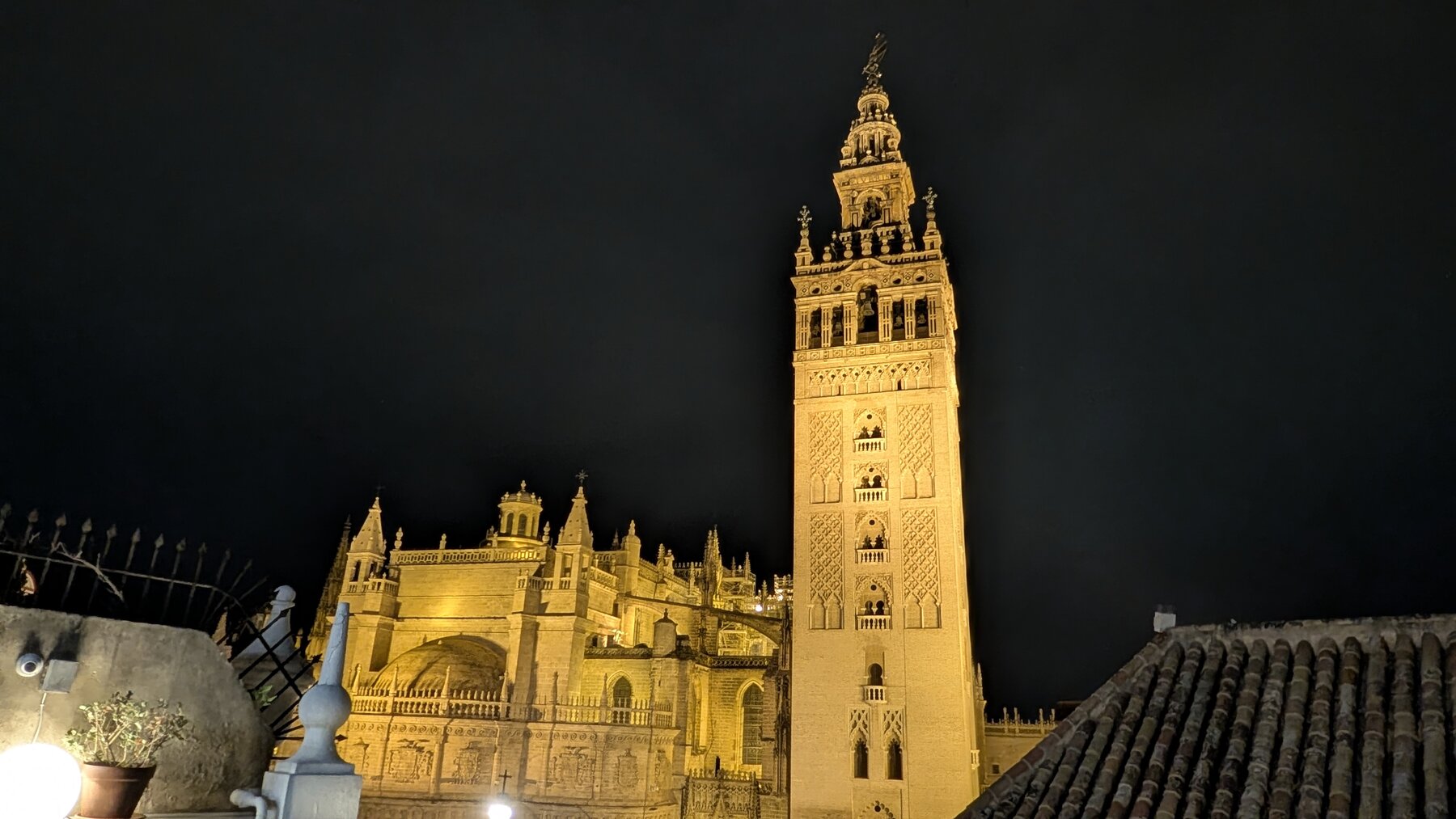
The tower is worth the climb. It started as a minaret, which is why the ascent is ramps rather than stairs — the muezzin needed to reach the top by donkey five times a day. Crowded, but 10–15 minutes each way.
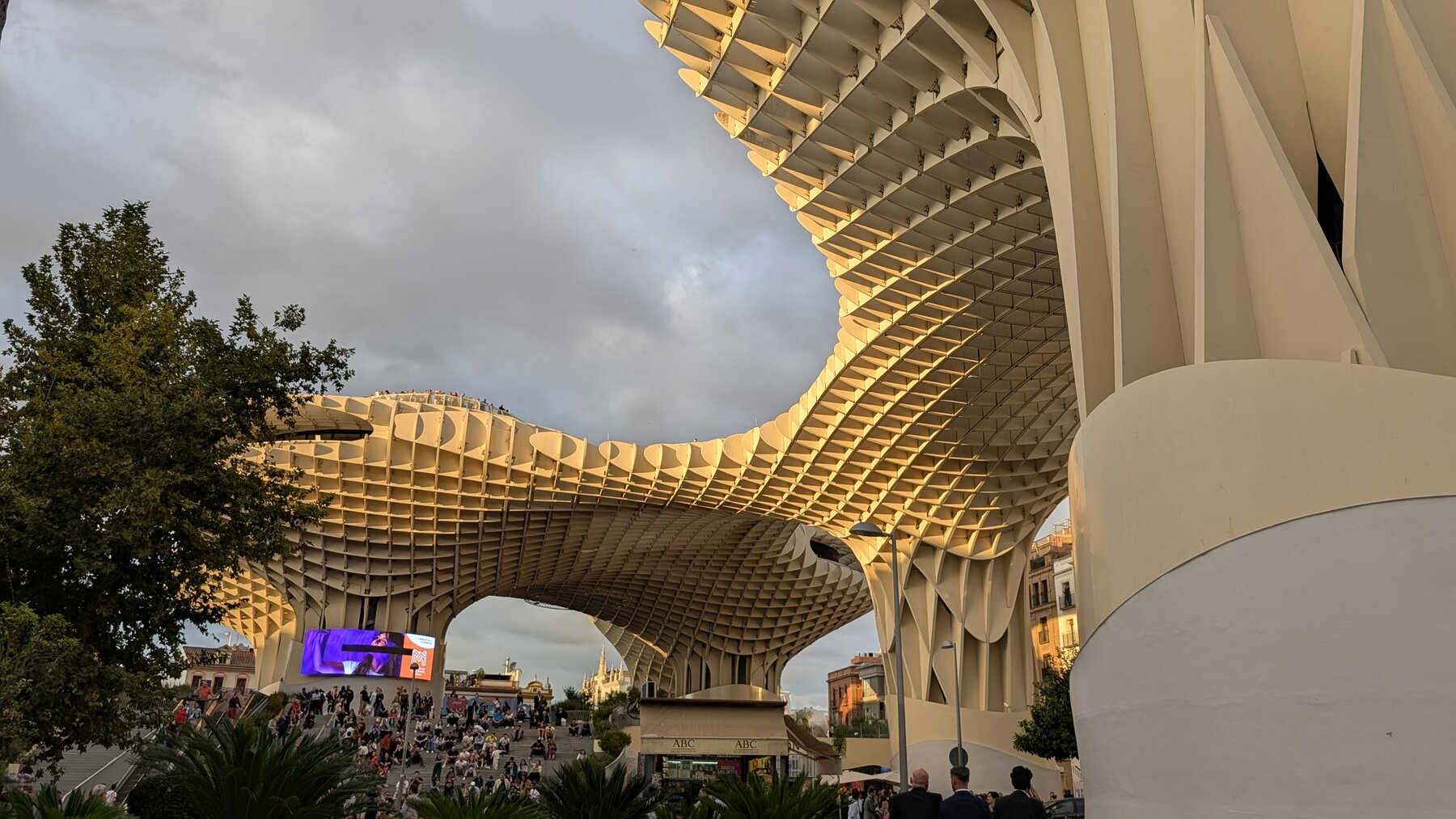
Las Setas — “The Mushrooms” — is what locals call the Metropol Parasol, a massive wooden structure built in 2011 that nobody quite knows how to feel about. They’re polarizing, but the square beneath them feels genuinely used — kids on scooters, families at the surrounding cafes, pickup soccer in the flat open spaces. It’s a neighborhood plaza that happens to have a landmark on top.
It’s hard not to wonder if they’ll eventually become beloved the way the Eiffel Tower was once loathed. The rooftop walkway has the best sunset view of the Cathedral skyline in the city, and the basement holds Roman ruins — a reminder that in Seville, you’re never more than a few feet from another century.
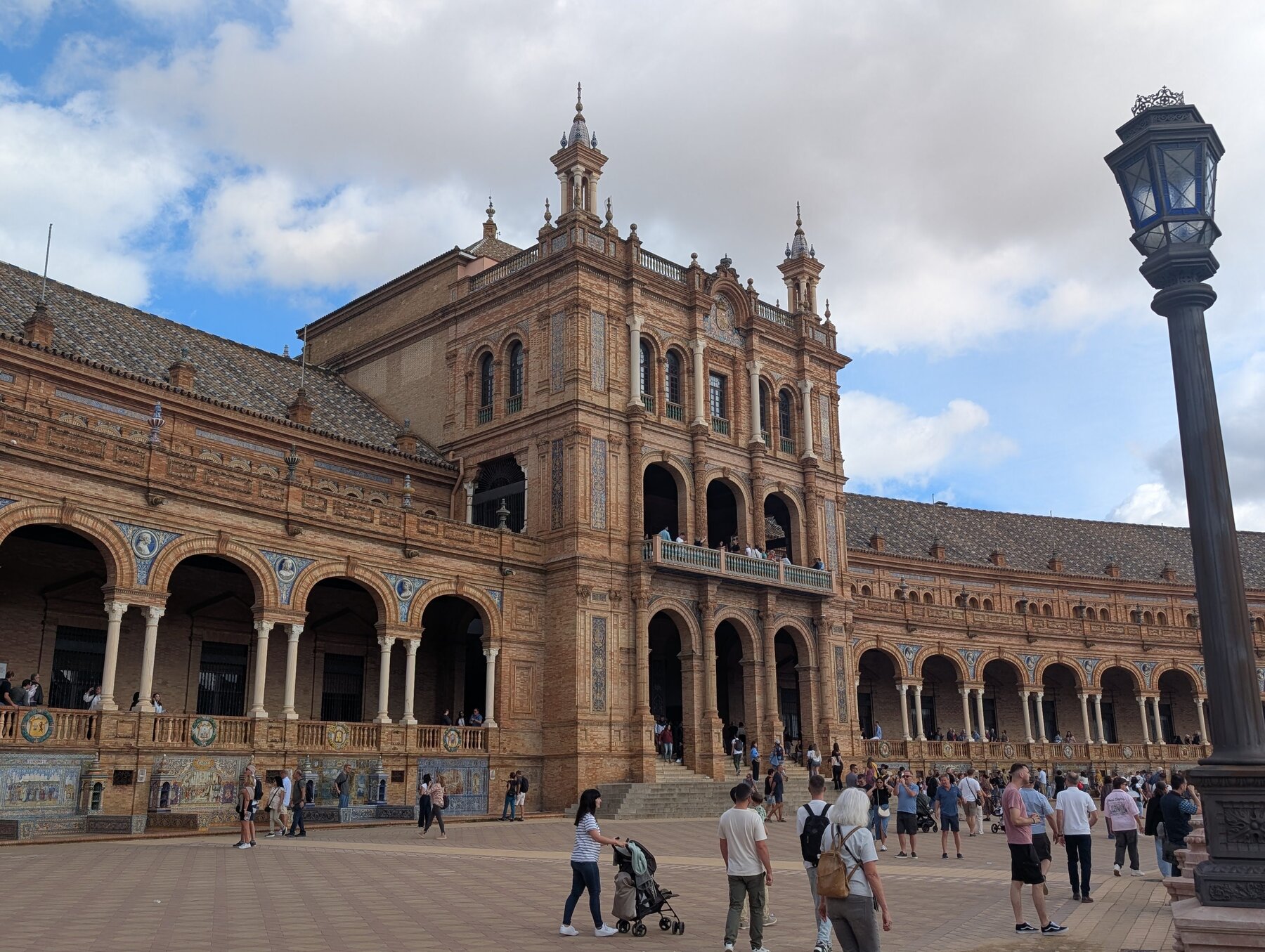
The Plaza de España was built for the 1929 Ibero-American Exposition — an exercise in national showmanship that still delivers. The curved building wraps around you in a mix of Baroque, Renaissance, and Moorish revival styles, and the scale is deliberately cinematic. Where the Alcázar is intimate and layered, the Plaza is expansive and performative — street performers, tourists posing on the tiled bridges, and a ‘world’s fair’ energy that somehow hasn’t faded in nearly a century. It opened just before the Depression hit, which makes the optimism feel both earned and poignant.
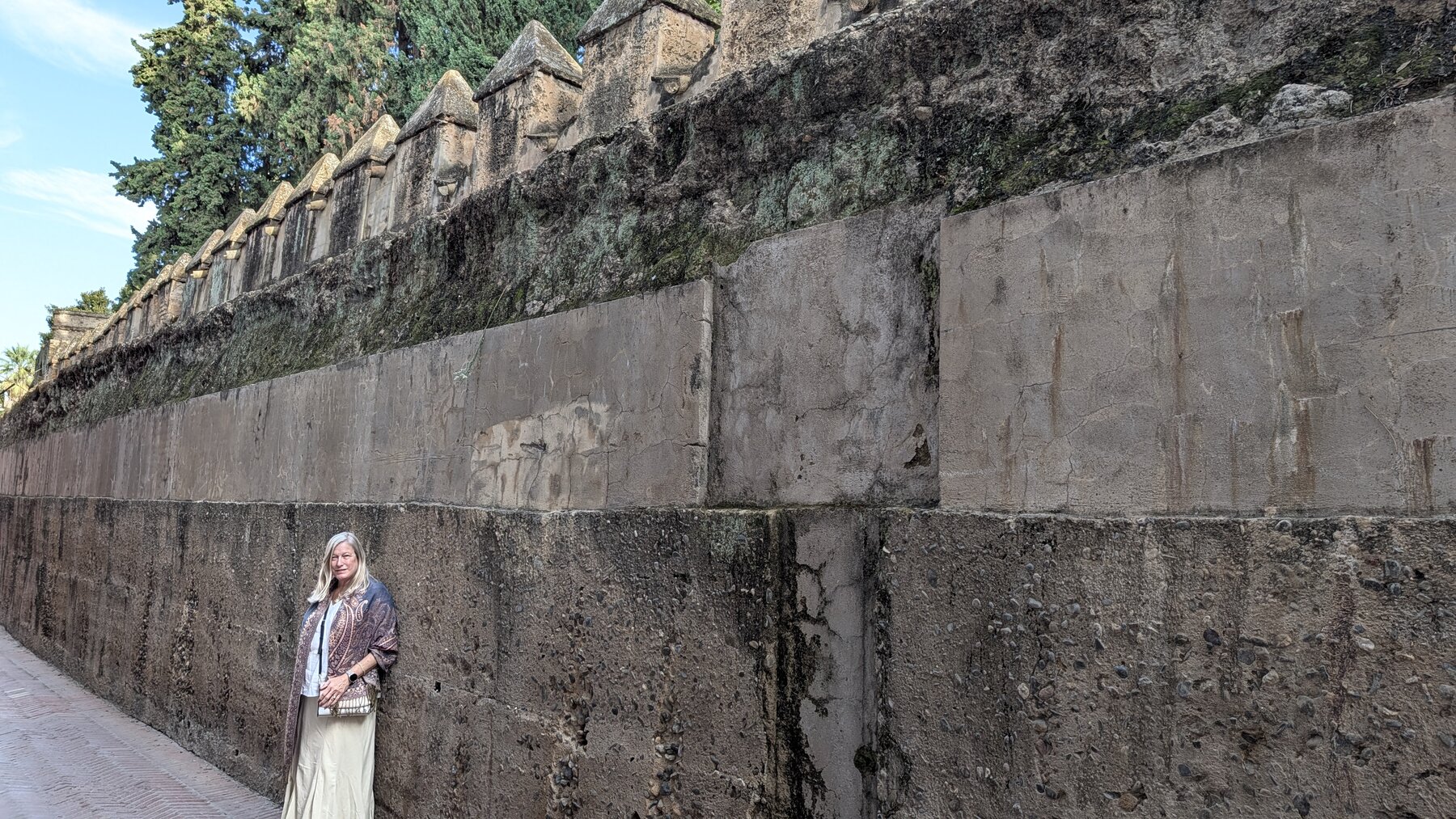
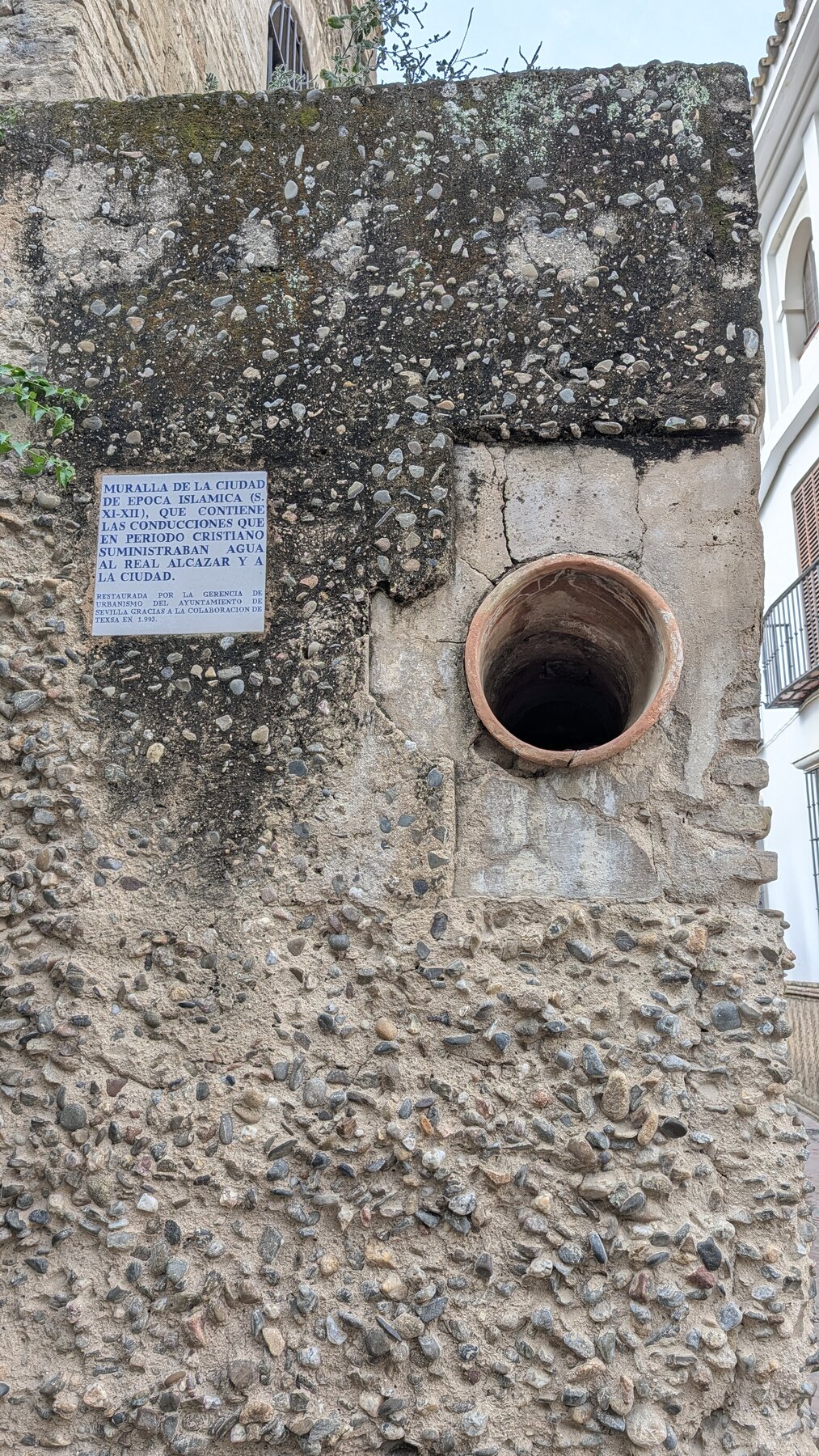
“Water Alley” is the iconic, picturesque 140-meter pedestrian street running directly alongside the ancient Moorish defensive walls in Seville’s Santa Cruz quarter.
An Evening of Flamenco
We were skeptical about La Casa del Flamenco— not sure we liked flamenco, and suspicious of anything aimed at tourists. Multiple locals, including the guitarist from Ronda, pointed us here as the most authentic show in the city. They were right.
La Casa del Flamenco is in a 15th-century courtyard in Santa Cruz — no microphones, no amplifiers, no drink service during the performance. The guitar and voice bounce off marble columns and stone arches, and from the front row you’re close enough to hear the dancer’s shoes hit the floor before the sound reaches the back wall. It’s intense, unmediated, and over in an hour — exactly the right amount.
Where We Stayed
The Vincci Seleccion Unuk has the bones of a great hotel — marble staircases, a central courtyard, and a junior suite with futuristic touches like mood lighting and electric blinds. The location in the old town was right. The room was comfortable.
But we’d booked it largely for the rooftop bar and restaurant, which their website sells hard — and it was closed our entire week. Early November, still warm enough to eat outside, and no explanation beyond vague deflections. We weren’t the only ones caught off guard; we watched locals arrive for rooftop dinner reservations only to be turned away at the door. That’s not a seasonal closure. That’s poor communication.
The ground-floor restaurant was fine. The hotel was fine. But “fine” is what you say when the thing you came for doesn’t show up.
Food & Dining
The hotel’s rooftop was a loss for drinks, not dinner — we’d always planned to eat out. We just planned too carefully. Seville is a place where tapas culture isn’t a marketing term — it’s how people eat.
Every local we talked to said the same thing: nobody sits down for two hours. Locals drop in somewhere, have one drink and 1 tapa, and move on. We could walk up to a restaurant and see it “full” — but the turnover is such that a table seems to clear within 5–10 minutes.
The servers are like F-1 pit crews in clearing a table and prepping it for the next group. You can walk up to any restaurant, feel out whether you like the vibe, hang out, and sit down, all within 10 minutes.
In 4 nights we ate at 10 or 12 places, almost all chosen by walking past and liking the look of them.
As much as we enjoy Spanish food, there’s a sameness to Spanish menus that caught up with us. We love Jamon Iberico, but towards the end of week 2 we couldn’t even look at it.
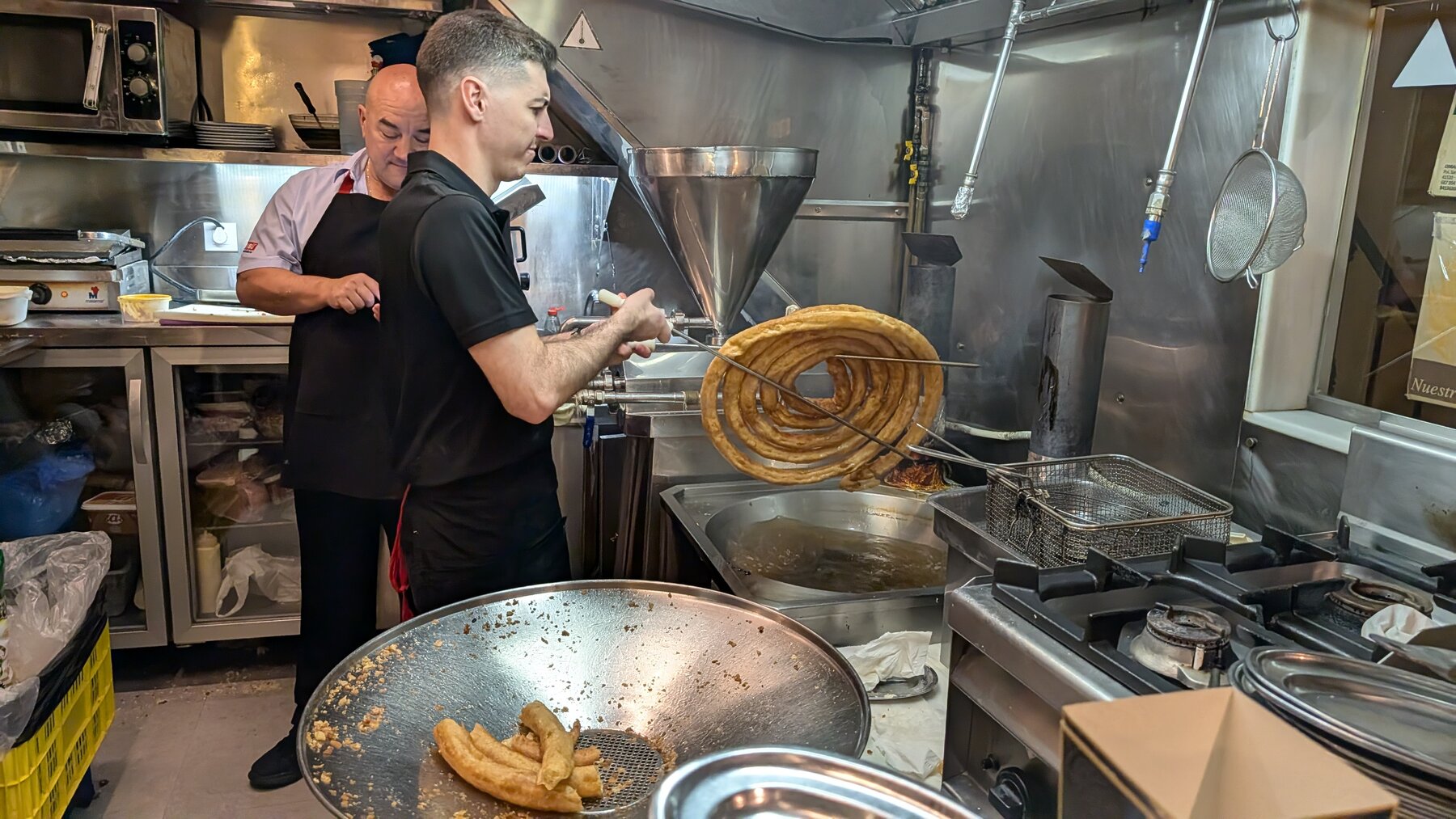
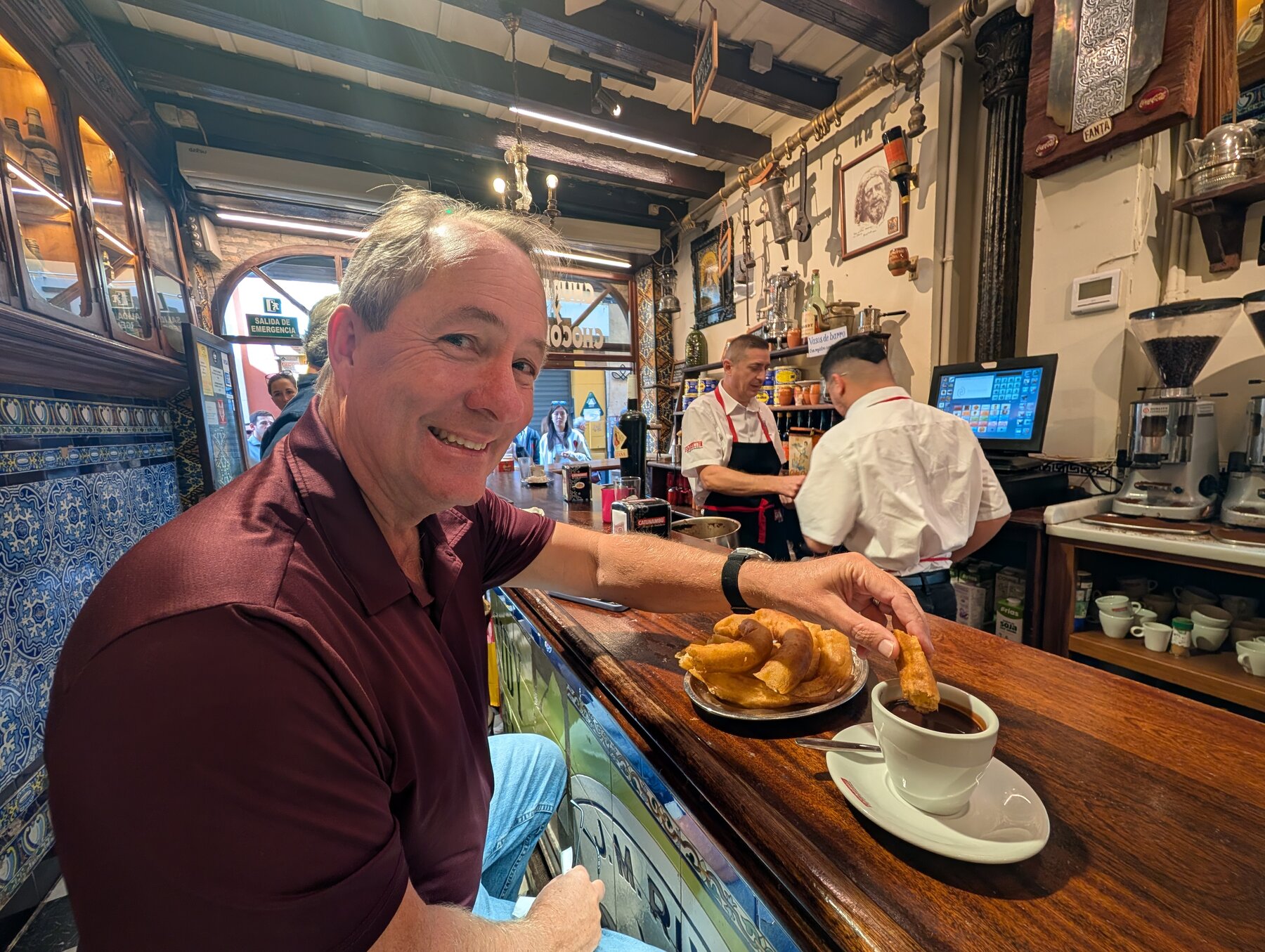
Bar El Comercio has been making fresh churros since 1904 — light, not greasy, served with chocolate for dipping. Nothing like what gets sold as churros in California. Worth going even if you think you don’t like churros. Not a responsible daily breakfast, but we understood the temptation.
Practical Tips
Seville has a reputation as one of the hottest cities in Europe. We were there in early November — warm, but not the brutal 100-degree days of summer. Even so, the city noticeably quieted down between 2:00 and 5:00 PM, and dinner rarely starts before 9:00 PM. Show up at a tapas bar at 7:00 and you’ll be eating with other tourists. The real energy emerges after 10:00.
Book the Alcázar and Cathedral online in advance — without timed tickets, the lines are brutal. Aim for the first slot of the day, especially at the Alcázar, where the gardens deserve time before the heat and crowds arrive. Don’t rush the gardens; they’re half the experience.
The old town is compact enough that wandering is the activity, not filler between sites. Plan one anchor per half-day — the Alcázar, the Cathedral, Plaza de Espana — and leave the rest open. The Cathedral tower is visible from most of the old town and works as a constant landmark; we stopped checking maps after the first day.
At tapas bars, stand at the bar rather than asking for a table. It’s faster, more social, and closer to how locals eat. In traditional spots, the bartender marks your tab in chalk directly on the bar top — a small detail, but one of those things that makes Seville feel like it hasn’t fully given in to the modern world.
Seville has excellent train connections — Madrid is under 3 hours by high-speed rail. We arrived by car from Ronda, which has no train service, using the drive to see some White Villages along the way. From most other cities, the train is the obvious choice.
Seville held together better than any city on this trip. The Alcázar alone would justify the stop, but what stayed with us was the rhythm — the wandering, the unplanned tapas, the flamenco we almost skipped. Even the hotel disappointment fit the pattern: the best things in Seville were the ones we didn’t book in advance. We’d do it again with even less of a plan.
🥜 Seville in a Nutshell
Seville in Pictures
8 Photos
Share Your Thoughts
We'd love to hear about your experience!